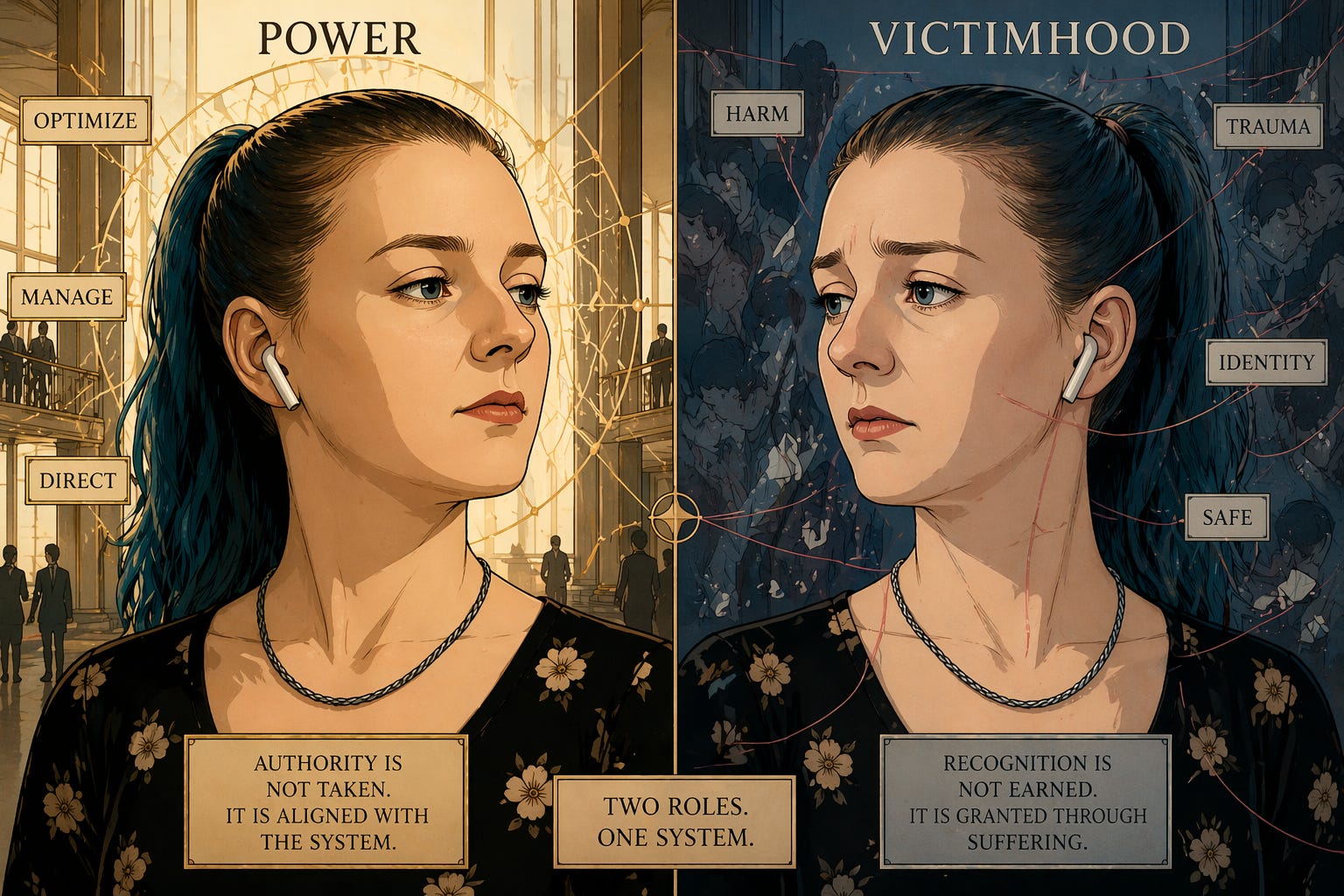
22 Ways Ideologies Create the Machine
A Non-Partisan Explanation of Dignity within Weber’s Cage
I was going to release a manifesto, not just declaring any rationalization for drastic action, followed up by a hefty dose of serial killing, but merely explaining and justifying myself before will and choices, but then I realized, that despite my rationalizations for feelings, and my reconstructed solutions to the reformulation of reality, that might come across to some people as misleading and too lacking in dignity to release, even as much as I pulled my punches on feelings, when writing it. Writing something called, “Why I rejected Roman Catholicism, and Fuck You, here are all the cogent, mature, logical reasons I can justify my morality, vision of the world, and right to still act manly” is still not differentiated enough from the style of manifesto an Eliot Rodger would write or a Theodore Kaczynski.
While clear enough in thinking, I still felt that it lacks dignity, to start from personal feelings, never fully declared, but then to assert the supremacy of those feelings anyway. I know the Catholic would simply accuse me of having a malformed conscience, operating from clear vincible ignorance, full culpability. And while I might dismiss the charge, there still is a certain lack of dignity, in not presenting the problems in a completely dispassionate synoptic panoramic way. A certain dignity is lost in not doing that first. Indeed, when I re-read my own words, I felt, how could one not secretly come away from reading this thinking, “Boy, this guy has been fantasizing about being a member of Hitlers Wehrmacht for too long,” and “he talks with the aloof clinical urbane sociopathy of the Black Numenorean Mouth of Sauron.” Stalin with a computer. Neither image really inspires the kind of poise I would ordinarily want to maintain.
Instead of producing that kind of almost predictable manifesto of resentment, I thought it better to contrast the divisions that people under the pre-modern registers that even Leftists always swing back to, when they are in a position of weakness or defeat; since it is not as if even the most passionate ideologue, never wavers on something, never backtracks, and never reaches for the contrasts that made his decisions possible. Ideological decisions speak a lot in the registers of hate, since the secret of politics is “who hates who” but very rarely do they start with “love hurts more, and primarily and exclusively.” You can sound emotional or you can sound like Sam Harris, and the latter might come off as even more nasty. What I think might actually serve us, therefore, and what I have put together here is therefore more a taxonomy of ideological distortions, a kind of diagnostic manual of modern pathologies.
1. Racism / Absolutism
Catholic: The sin is not the category but the instrumentalization: the person is reduced from image-bearer to object of use or exclusion. Once the person becomes a means, charity and justice both collapse.
Buddhist: The self is reified into a rigid identity and projected onto others. This freezes living beings into mental objects and generates suffering through aversion and delusion.
Lasch–Đilas: Identity becomes a currency of moral status; elites and counter-elites alike use it to justify hierarchy while presenting it as moral necessity rather than power.
2. Sexual Libertinism / Sexual Commodification
Catholic: Sexuality becomes detached from personal dignity and ordered love, turning bodies into consumable goods. This is a sin against both chastity and justice because the person becomes a product.
Buddhist: Craving replaces mindfulness and compassion. Desire objectifies the other and deepens attachment and suffering.
Lasch–Đilas: The liberated self becomes a consuming self; intimacy dissolves into appetite, producing the narcissistic personality that mistakes stimulation for freedom.
3. Sexual Puritanical Coercion
Catholic: Conscience is replaced by control, turning moral law into an instrument of domination rather than formation. This violates both human dignity and authentic moral freedom.
Buddhist: Aversion and fear masquerade as virtue. Coercion increases suffering and hardens the ego.
Weber–Burnham: Moral discipline becomes system discipline; behavior is standardized for predictability, not virtue, allowing institutions to regulate life without direct force.
4. Technocratic Social Engineering
Catholic: Persons are treated as programmable material rather than free moral agents. This violates the dignity of the human person and the primacy of conscience.
Buddhist: Human life is reduced to a technical problem. This expresses ignorance of the living, changing nature of beings.
Weber–Burnham: This is not an aberration. It is the natural language of administrative power. Systems require predictability, and predictability requires the reduction of persons into variables.
5. Revolutionary Utopianism
Catholic: Present persons are sacrificed to imagined future goods. This is intrinsic injustice: evil is justified by abstraction.
Buddhist: Attachment to an idealized future produces cruelty in the present. Suffering is multiplied through delusion.
Lasch–Đilas: The promise of a purified future legitimizes a new ruling class; revolutionary elites justify domination by claiming to embody historical necessity.
6. Market Fundamentalism
Catholic: Human value is subordinated to efficiency and profit. This reverses the moral order by placing wealth over the person.
Buddhist: Craving becomes institutionalized. Suffering expands as desire is endlessly stimulated.
Weber–Burnham: The market here is not “free.” It is a coordinating mechanism that disciplines behavior without needing direct authority.
7. Nationalist Absolutism
Catholic: The person is reduced to function of the collective. The nation becomes an idol that consumes its members.
Buddhist: Identity hardens around group attachment. Aversion to outsiders intensifies suffering.
Lasch–Đilas: The nation becomes a vehicle for elite consolidation; unity is invoked while power is centralized in those who define its meaning.
8. Totalizing Activism
Catholic: Moral coercion replaces charity. The good becomes an instrument of control rather than conversion.
Buddhist: Righteous anger masks ego. Compassion is displaced by attachment to identity and cause.
Lasch–Đilas: Activism becomes a performance of moral superiority; status is gained through visible outrage rather than real transformation.
9. Cancel Culture / Moral Purges
Catholic: The sinner is erased rather than called to repentance. Justice is replaced by symbolic violence.
Buddhist: Aversion and self-righteousness dominate. The other becomes an object for punishment rather than understanding.
Weber–Burnham: Moral purges function as informal enforcement mechanisms inside decentralized systems where formal authority is weak.
10. Biological Reductionism
Catholic: The person is collapsed into mechanism. Spiritual dignity is denied.
Buddhist: Mind is reduced to matter. This ignores the dynamic, interdependent nature of experience.
Weber–Burnham: The human being is reframed as a system to be optimized; scientific language becomes a tool for administrative intervention.
11. Radical Constructivism
Catholic: Human nature is treated as raw material. Creation is replaced by redesign.
Buddhist: The self is falsely imagined as infinitely malleable. This deepens confusion about impermanence and identity.
Lasch–Đilas: The self appears free but becomes dependent on cultural authorities who define the acceptable forms of reinvention.
12. Eugenics (Old or New)
Catholic: Worth is measured by utility. The weakest are declared disposable.
Buddhist: Compassion is replaced by calculation. Suffering is increased by attachment to control.
Weber–Burnham: Selection and optimization reflect system logic; populations are managed as resources rather than communities.
13. Surveillance Absolutism
Catholic: The person becomes a security object. Trust and freedom are sacrificed to control.
Buddhist: Fear becomes institutionalized. Anxiety spreads through grasping at certainty.
Weber–Burnham: Visibility replaces trust; control is achieved through continuous monitoring rather than overt coercion.
14. Individualism
Catholic: Community is reduced to contract. The common good dissolves.
Buddhist: The self is falsely absolutized. Interdependence is denied, increasing isolation and suffering.
Lasch–Đilas: The isolated individual becomes easier to manage; weakened social bonds increase dependence on institutional systems.
15. Authoritarian Paternalism
Catholic: Adults are treated as children. Moral agency is suppressed.
Buddhist: Control replaces compassion. Ego hides behind order.
Weber–Burnham: Authority is justified through expertise; individuals are subordinated to systems that claim superior knowledge.
16. Permanent Victimhood Politics
Catholic: Identity is frozen in injury. Healing is displaced by grievance.
Buddhist: The self is fixated on suffering. Attachment prevents release.
Lasch–Đilas: Suffering becomes a basis for status; grievance is institutionalized as a means of securing recognition and influence.
17. Permanent Enemy Politics
Catholic: The neighbor is converted into an object of hatred. Charity collapses.
Buddhist: Aversion dominates perception. Conflict multiplies suffering.
Lasch–Đilas: The enemy is necessary to sustain identity; conflict stabilizes narratives and justifies continued authority.
18. Pornographic Culture
Catholic: Intimacy is stripped of personal meaning. Persons become images for consumption.
Buddhist: Desire is endlessly provoked. The cycle of craving deepens.
Lasch–Đilas: Desire is detached from relationship and redirected into consumption; the individual becomes both consumer and product.
19. Hyper-Medicalization of Life
Catholic: The person becomes a patient-object. Meaning is reduced to management.
Buddhist: Fear of suffering becomes obsessive. Acceptance and wisdom are displaced by control.
Weber–Burnham: Life is administered through systems of diagnosis and treatment; meaning is replaced by continuous management.
20. Militaristic Absolutism
Catholic: Persons are treated as expendable assets. Peace is subordinated to power.
Buddhist: Violence becomes normalized. Suffering multiplies through hatred and fear.
Weber–Burnham: Individuals are absorbed into operational systems; efficiency and command override personal moral judgment.
21. Climate Extremism
Catholic: Present persons are sacrificed to abstract future models. The human person is displaced by the system.
Buddhist: Attachment to catastrophe narratives generates panic and coercion. Compassion for living beings is lost.
Weber–Burnham: Abstract models justify large-scale intervention; human beings are subordinated to system-level optimization goals.
22. Data-Driven Governance Absolutism
Catholic: Persons are reduced to statistics. Moral judgment is outsourced to systems.
Buddhist: Reality is mistaken for measurement. Wisdom is replaced by calculation.
Weber–Burnham: Measurement becomes authority. Decision-making shifts from judgment to system outputs, consolidating power in those who design and interpret the data.
Conclusion
I am not standing above this. I am standing inside of all this. I am not without my own emotions and reactions to these matters, but I am capable of looking at these things from the mountain top, so-to-speak. I am not outside the problem, for indeed, I am one of the people being shaped by the problem. Therefore, it serves us best not to condescend to the suffering and mistakes of others but to look at them in as many new ways as possible. These ideologies do not persist because they are correct, or even because they are believed in any deep sense, but because they are useful. Each one performs the same operation: it takes the human being and simplifies him, into a category, a function, a data point, a patient, a victim, a consumer. What appears as moral disagreement is more often and might be better viewed as competing methods of reduction, each claiming dignity while quietly stripping it away.
What Karl Marx gets wrong is not that domination exists, but that it is sufficient as an explanation. He assumes that if the oppressor is removed, the distortion disappears. But these distortions appear everywhere, across markets, states, activist movements, religious moralism, and even scientific frameworks. They are not owned by a class, nor confined to an ideology. They are generated by the conditions of modern organization itself. Max Weber saw that the system becomes self-sustaining, and James Burnham saw who moves within it, not masters in any absolute sense, but managers, administrators, and technicians of control, operating within constraints they did not design and cannot escape.
You think you are choosing between ideologies, and I am not above having certain preferences. However, the problem becomes that we are choosing between methods of reduction, and each one denies something in our true feelings. Each one tells you what a person is, what can be ignored, what can be optimized, and what can be sacrificed. This is not to deny that we all have distortions, or that we should not, but merely an accounting to help us become more self-aware, of when we are twisting and turning, slightly more in one direction or the other. For once you accept, someone else’s definition, you become legible to their system, and once you are legible, you can be processed, either against your perceived self-interest or in synchronicity with them. This is why some people rise while others get purged under any system. We do not always know, when to bend to power, and when to stand firm. The modern man is not destroyed by one ideology; he is divided and administered by all of them.