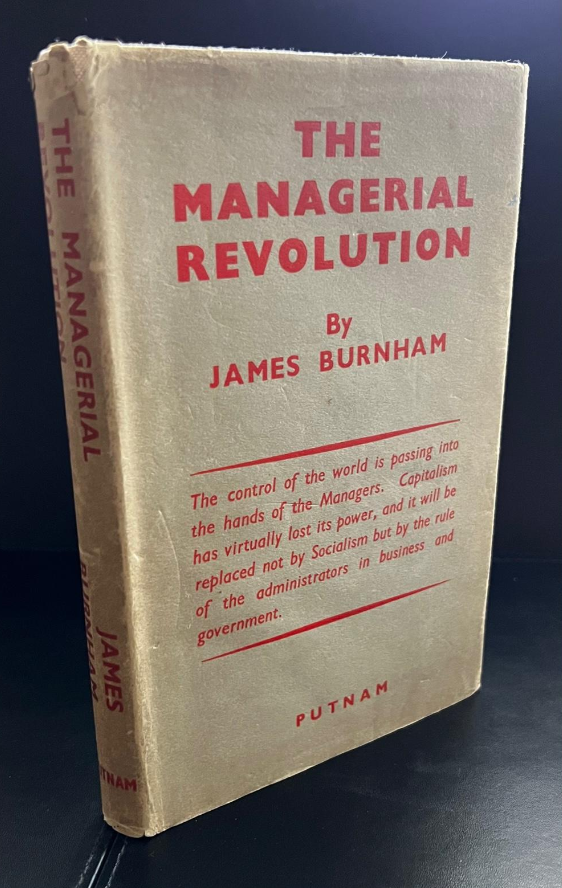
The problem that I have with elite theory as well as philosophy in general is the obsession with trivialities. It’s like watching the news or attending church – endless conversations about thinkers who in actuality really aren’t all that important. I feel like a lot of it is posturing: it’s about demonstrating all of the books you’ve read and then bloviating forever about a small handful of worthwhile points.
Take The Machiavellians by James Burnham. Here are the most important points of the book:
- Politics is fundamentally about power.
- Every large society is ruled by a minority.
- Political rhetoric does not necessarily explain political behavior.
- Ruling classes develop legitimating stories.
- Organizations naturally generate oligarchies.
- Elites have to circulate.
- People are not primarily moved by rigorous logical argument.
- Democracy does not abolish elite rule.
- Freedom depends on organized opposition and competing centers of power.
It’s over three hundred pages, just talking about this. Apparently you’re not informed if you decide to skip it.
The typical intellectual is like a very bad gold miner. He chooses a plot, and then spends years pinching every last grain and speck. Then he moves into the adjacent plot.

The point of studying is to change the world, not to enmesh yourself in some pretentious “tradition.” This means getting high-impact information in the most economical manner possible. BIG ideas, the bigger the better. And as many of them as possible, acquired in any way that works.
People are afraid of being wrong because supposedly it is some great social mistake – that the Nostalgia Critic is gonna come out and start doing skits. Being wrong is a meaningless thing to worry about. It is not possible to be right about everything, and you will make mistakes as you develop your semantic system. Sometimes it’s better to just let people correct you. And in that way, the critic becomes an extension of yourself. Why research everything when retards will just tell you the answer? Let them do all the work.
I use the term conversationalist to refer to mundane, elitist types of thinkers. This person does not really believe in his own ability to solve our political dilemma. Rather, this person sees himself as being capable of the next best thing: contributing to a tradition, and making it as a “figure.”
Thus, this person aims for respectability. Big words, thorough reading, insider knowledge, methodical education.
Let us contrast this with a serious white nationalist ie a utilitarian. This person probably doesn’t read philosophy or engage with any canon of thought. He doesn’t care about where his ideas “fit into” the greater dialectic. And he doesn’t really think about where he goes when he dies, or what his identity is, or which petty nationalism he subscribes to. It’s just “How do I solve it?”
He doesn’t really have any cherished positions – groyper, Nazbol, it doesn’t matter. It’s just white nationalism and whatever he thinks is true at any one time. So he has the flexibility to choose a better (or more efficient) idea if it comes along.
I do not really see this attitude anywhere. I think I know of maybe four or five other utilitarians beside myself. The rest are casual observers, conversationalists, or religious folk. You also have the hipsters, who engage in all manner of subcultural play, and the DOers, who just DO things and ask you why you’re not DOING anything.
The only negative thing that I’ll say about utilitarians (from what I’ve seen) is that they tend to be really arrogant overconfident pricks who sneer at everyone without a shred of self-awareness. I don’t know why this is, I guess once you realize how retarded right-wing discourse really is, you become retarded to compensate.
Or to put it another way: when you’re arrogant enough to think that you can solve these problems yourself, it gives you the clarity (and the confidence) to hit the target.
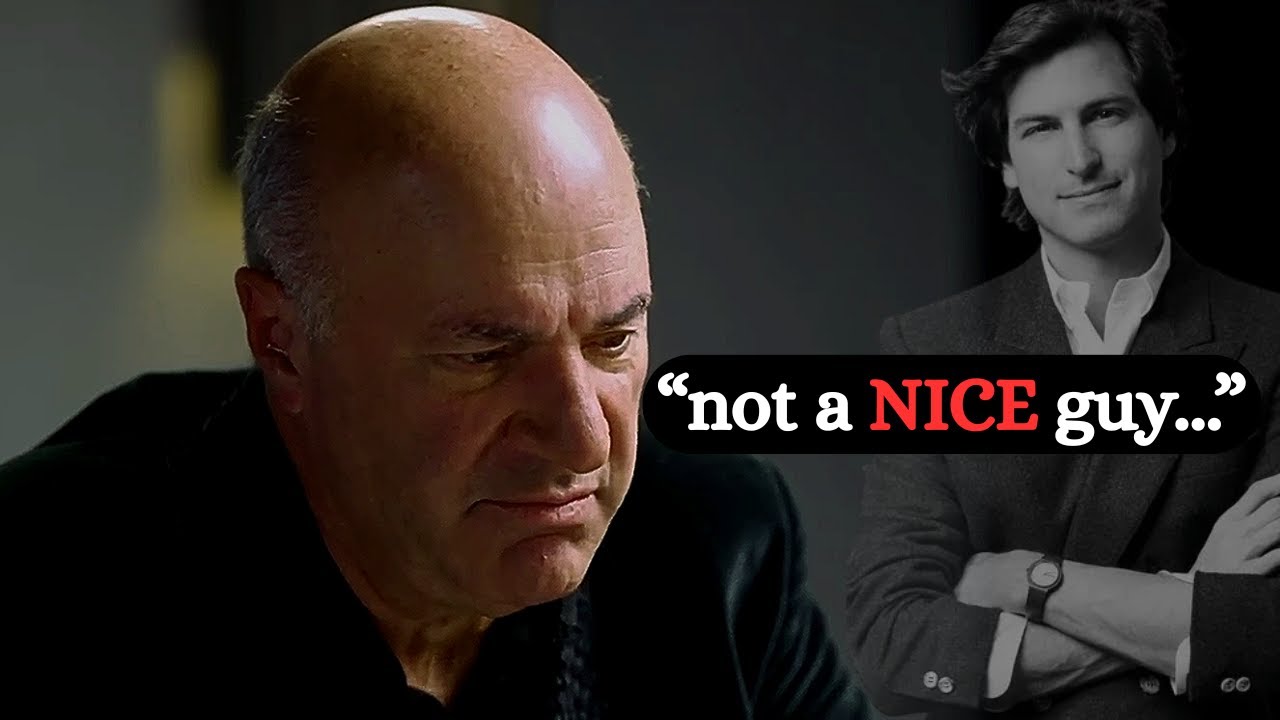
This is what we saw with Steve Jobs: Steve Jobs was an arrogant, arrogant man who treated his staff like trash. And yet he had the clarity to see through all of the noise (all of the humanity, professionalism, and conventional sentiment) to create truly revolutionary products.
By merely thinking “I can do it,” and then arranging your beliefs to fit that preconception, all of the nonsense falls away. Utilitarians don’t really fall for things like subculture, religion, or “law-like” sociology. They just kind of “get it.”
What is needed of course is not an arrogant atheist, but a truly free and open intellectual. One who looks for insight economically, but also listens when others are speaking. After all, you need to listen if you’re gonna be an intellectual. People who never listen get rusty: they finish ordering their ideas, then they start thinking in comfortable ways, and then they never have another new idea ever again. That’s why stuff like Christianity is bad: it’s just “believe, believe, believe” forever until the day you die. Maybe there’s another way of dealing with nihilism, or maybe there’s some other spirituality that makes more sense. Whatever, you get the idea.
As far as how I study, I go about it like this:
-
Browse the internet randomly looking for stuff that’s actually interesting. It can be anything: the Cambrian Explosion, postmodern Italian design, the history of paperclips. I follow my subconscious and where it really wants to go.
-
All the while, keep questions in my thoughts pertaining to politics. Ex: Why does all IRL activism turn into a larp?
-
Talk to ChatGPT about the problem. ChatGPT of course is very limited: it hallucinates, it doesn’t know everything, people will get mad or make fun of you for using it.
-
Ask ChatGPT to list out hundreds of books with simple one-line descriptions of what’s inside them. These are books that could be tangentially relevant, ex: books on systems theory, technology, psychology, marketing.
-
Pick one that’s really interesting and then get the EPUB / PDF.
-
Upload it to a project folder in ChatGPT and then ask it to summarize the first chapter of the book. Then create a second chat within the project and have it summarize chapter 2. And so on.
-
If the book actually looks worth reading, then read it. Or if only one or two chapters look worthwhile, read those.
-
Make a spontaneous connection between one of the major points in the book and the material consumed in step 1. Ideas should start flowing now as you reorganize your semantic system.
It’s not perfect. But this is how you actually figure stuff out, not by being a schoolboy and citing your “bibliography” in “Chicago style.” You just follow your curiosity and acquire a diversity of experience. You also study intentionally and economically. So what if you get stuff wrong? Who cares, you can fix it later. Just solve these puzzles. Get them solved, stop getting hung up.
I swear to God, my life has been a never-ending Renaissance since I started doing this; every few days I figure out another piece of the puzzle. It’s made studying actually really fun and exciting. I can look at anything, anything at all – from my workplace, to my trip to the store, to what shoes I’m wearing, and somewhere in there could be the next big insight. So I’m paying attention at all times, looking for patterns everywhere.
Really what white nationalists needed to realize all along was the untapped potential of the internet. It contains the sum total of recorded knowledge, as well as tools to parse this knowledge economically. Just humble yourself and stay focused on the prize.
