I just finished reading The Rise and Fall of Anglo-America by Eric Kaufmann.
I must admit - this is the best book I’ve ever read. Literally, my favorite book ever, now. The breadth of his reading is incredible.
I did not know that it is available for free on his website, sneps.net. I did not even know that was his website. I knew of his substack, but the link to his book from there is broken, so I never got around to reading it. I sort of just gave up.
But I just navigated to the home page a little while ago, and I found it there.
I think that his prescription of ethnic identity and community in a multicultural environment, etc., is probably the best possible option right now. I can’t imagine some kind of nationalism happening…not here, not anywhere in the Western world.
He pulls no punches that the current system is actually repressive of people who desire culture. He uses the word repress explicitly: “The repression of national ethnicity is a pan-Western phenomenon.”
But you just have to read it. You have to read the long (very long!) history, and then you have to stick to the end, where he gives his prescription for the solution to our cultural problems, which he titles “liberal ethnicity.”
I don’t think anybody can be educated about the cultural problems of the Anglosphere without reading a few books like this.
I don’t think people understand just how vile multiculturalism is and how we absolutely cannot tolerate liberalism, immigration, or democracy. Just observe the physiognomy of any “Elite Human Capital” or tech bro and tell me that these people don’t deserve to be completely exterminated.
Well I think Kaufmann has softened me on multiculturalism. I think, still, that there is romance in nationalism - jolly old england where you can walk to the town square and just have a good time with your friends, who are just anybody and everybody in the town, who are like family. Think about India and China, where random older men and women are called “aunt” and “uncle.” That is an incredible level of solidarity!
But multiculturalism is at least doable. The main problem is that the elite of the West actually represses our ethnic identities, especially majority ethnic identities, due to the fact that having an ethnic group is itself a violation of liberty and equality (you have to read the book to hear his arguments for this, and you can then append your own arguments onto his).
So going back literally 100 years you had leading liberal activists such as Randolph Bourne arguing that minority ethnic groups’ cultures and communities should be praised and boosted, and the majority should be intentionally repressed. He said this in part because he hated and distrusted his own people, and figured that the WASP people would be de-clawed without their ethnic sensibilities, and he also did it because he secretly believed that transcending racial/ethnic identification was a path to evolution, and he kind of preferred that idea, and maybe hoped for his own WASP people to achieve that transcendence.
The overall effect, of course, is just cultural repression. There is no transcendence. There are some liberals who have a lot of fun doing fruitless hipster stuff, which goes nowhere (even their cherished artistic spaces are being taken over by serious and competent Chinese people now).
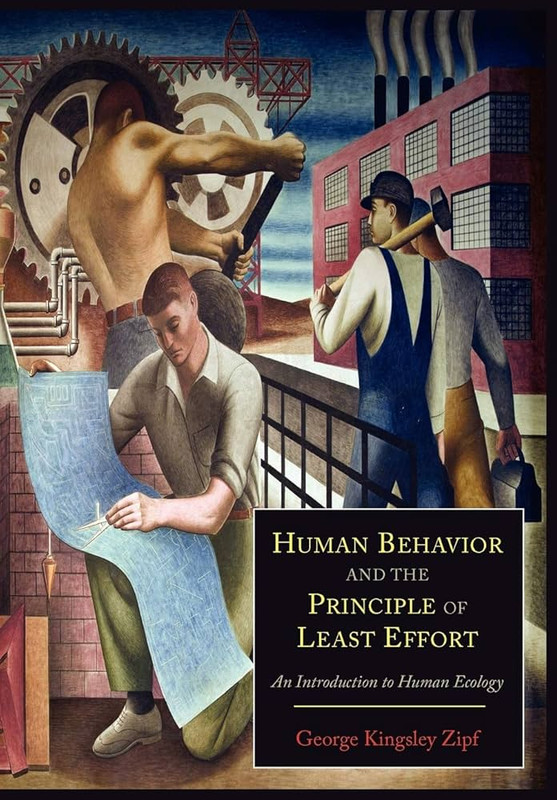
Multiculturalism currently follows Zipf’s “Principle of Least Effort.” This is the principle that all human decision-making follows the “path of least resistance” ie the choice that uses the least total average work.
However, as a choice, it is a matter of perception. Multiculturalism appears to use a smaller amount of work, because of the sum total of the arguments considered. Presented a different way, multiculturalism may actually appear to be MORE work than it is worth.
White nationalism is a matter of controlling this perception.
This may be because “a fun game” brings out all the passion and imagination required to germinate an institution.
Liberalism is dying. It’s old, it’s routine, it’s not fun anymore. There is nothing to look forward to if you’re a liberal. You grew up under liberalism, and you have explored liberal multicultural society. Socialism feels like a dumb larp, and everyone can sense it.
White nationalism on the other hand, is dangerous and sharp. It presents a mysterious vista of cultural possibility. Lost, bored, tired people will quietly latch onto this. Because liberalism is ultimately like consuming an entire bag of potato chips: it makes you feel sick, lonely, alienated, disorganized…
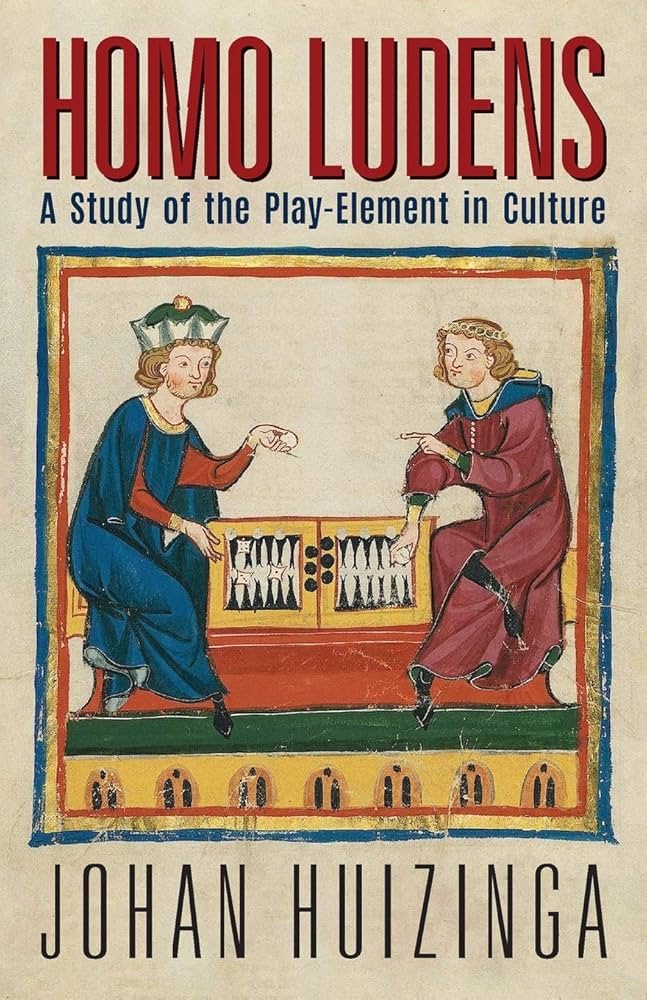
Well I’d add (not a contradiction of your argument) that Johan Huizinga died in 1945 and lived in the Netherlands.
So, he never had any experience with a post-national, ethnically-dead society. He did not know what it is like to be both hyper-individualist and divorced from an ethnic identity.
So, when he talks about “play,” he is talking within the confines of a society where members have a general sense of comfort and meaning. That comfort and meaning comes from the collectivism and fraternity of ethnically-identified and unified groups.
He could never understand what it is like to try to “play” while being depressed, aimless, purposeless, lonely, unloved, and perhaps even a member of a hated racial group surrounded by the peoples who hate you.
 Glad you like it