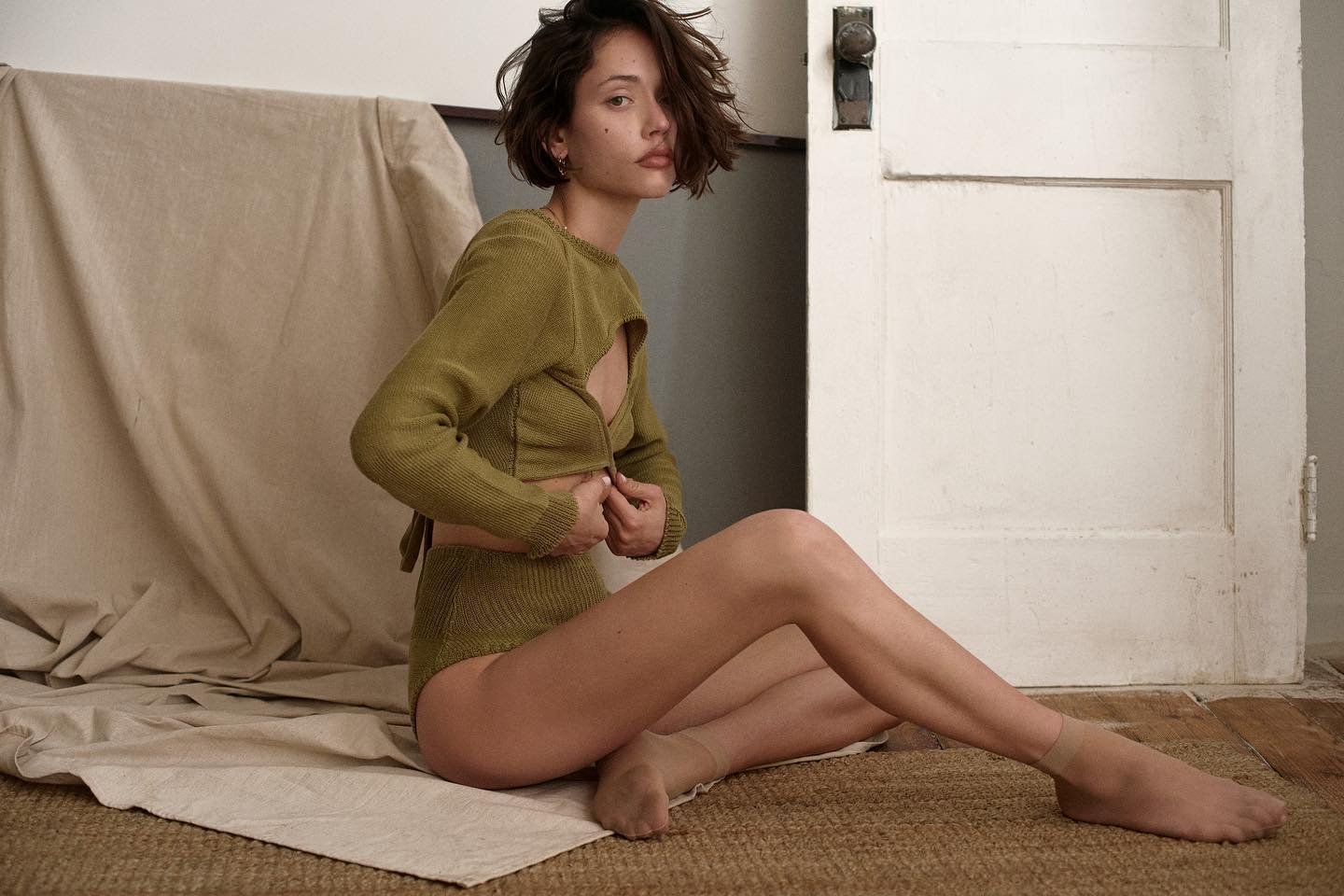
The way that people evaluate each other’s appearance and attractiveness has always puzzled me. It seems that every individual has his or her own criteria, there are no objective standards, yet for some reason society agrees on who the beautiful people are (and it’s usually a rather mediocre looking group of people). To explain these inconsistencies, I propose the following model of appearance, and I propose that people tend to focus on different depths or layers of the model.
The layered model: There are four layers to human appearance. They are, starting with the outermost layer, feathers, skin, muscle, and bone. Each layer is governed by different factors, and the ability to perceive the layers becomes less common with depth (everyone can see the feather layer, but few people can see the bone layer).
- The feather layer - named so because of its role, which is similar to the plumage of birds. It consists of clothing, hair, accessories (glasses, jewelry) and everything that’s on top of our skin. It includes makeup, nails, tattoos (despite the fact that ink is underneath the skin), beards, accessories, shoes, and so on. This layer is chiefly governed by the choices of the person in question. It has nothing to do with genes, only with deciding to follow fashion or not; some people also think that the elements of this layer are useful tools for expressing personality or identity.
- The skin layer - It consists of our skin, and the visible natural features of our appearance, such as eyes and teeth. It’s very simple and plain, but as I will explain, many people fail to look at others even skin-deep.
- The muscle layer - it includes muscle, fat, and other soft tissues which make up our bodies. This layer is governed primarily by calorie intake and exercise regime, or lifestyle in general. Unhealthy and sedentary people are very ugly on this layer, and athletic and active people are beautiful on this layer.
- The bone layer - it includes bones and other immutable internal characteristics. This is the innermost layer, and the most difficult to perceive. In fact, even if you can perceive this layer, it may take so long to discern the features of this layer that you only perceive them in your closest friends and relatives.
Some thoughts on the model, in no particular order.
- The fact that normies are stuck on the feathers layer, and care nothing for the deeper layers means that they are very easily fooled. Its possible to command obedience by simply wearing a suit, a hi-vis vest, or the right hat for the situation. It’s possible to evade attention by dressing plainly or cheaply.
- In the state of wilderness, the feather layer does not exist. It is entirely artificial. In history, it was simpler and more straightforward, and as society advanced it got exponentially more elaborate.
- Race is not skin-deep. It is bone-deep, obviously, and the most significant racial differences are not expressed in physical appearance at all.
- In history, monarchs, priests, members of secret societies, members of some privileged groups - always used the feather layer to signify their identity to others. This layer of appearance commanded respect and obedience, even if the person was hideous in layers underneath. This also happens in modern times, and only works on normies.
- The skin layer is uncommon to see in women, because of the omnipresence of makeup. In fact, men are sometimes so well-trained by society that they prefer a woman who obscures her face in this way!
- The muscle layer is sometimes appreciated by people well-versed in anatomy, and physical activity. However, in bodybuilding this layer is abused for vanity, and when bodybuilders prepare chiseled, dehydrated physiques for competitions, is when they are in fact weakest. The ideal in bodybuilding is unsustainable, and a strong, robust, and healthy body does not actually look very impressive to the uninitiated.
- Someone with beautiful inner layers will not be considered beautiful by normies, when no care is spent on the feather layer.
- The skin and muscle layers increase in beauty on their own, when the overall health improves (usually with nutrition and exercise). The outermost layer has nothing to do with health. The innermost layer cannot be changed by any method.
Feel free to poke holes in my model, there is definitely room to improve and refine its terms.