Re: Dimes on NeoStrata

Original article

Dimes, like a lot of white nationalists, thinks that we need to touch grass:

As a vanguardist you need to begin with a practical skillset, whether it be woodworking or training dogs. This will allow you to anchor your upward trajectory and create an intellectual base of operations from which you can branch out. This will be the divine prejudice which ensures you will not float off into an intellectual netherrealm where academic discussions of vague power politics underscored with pop-esotericism.

I strongly disagree with this. The problem is not that we haven’t been touching grass, it’s that we’ve been touching too much of it.

I do think that mass politics is outdated, but he doesn’t go far enough. The material conditions are completely different – as are the rules of radicalism.

Throughout his article, Dimes repeatedly says things like:

Many have correctly identified that successful revolutions tend to be originated within the intelligencia or the military… Revolutions very rarely arise from the working classes, the plebs, or The People.

and

The truth is that a nation (or grouping of similar complexity) can survive with an idealistic foundation that is betrayed in isolated cases as a response to changing circumstances but cannot survive with a foundation that is permanent treachery and fluid principles.

When we’re talking about systems, we’re really talking about objects and how they move around. Objects can move around in all sorts of ways, and so these rules must control for context before they can be useful stereotypes. This is not to say that I disagree with Dimes’ rules, but you should be very imaginative about all of the different ways that systems work. Rules that have applied for all of history may not apply in modernity. The objects don’t care if something is Lindy.

A similar issue arises when people talk about technology. Technology is explained through interesting stories, not a real examination of use, adoption, or significance.

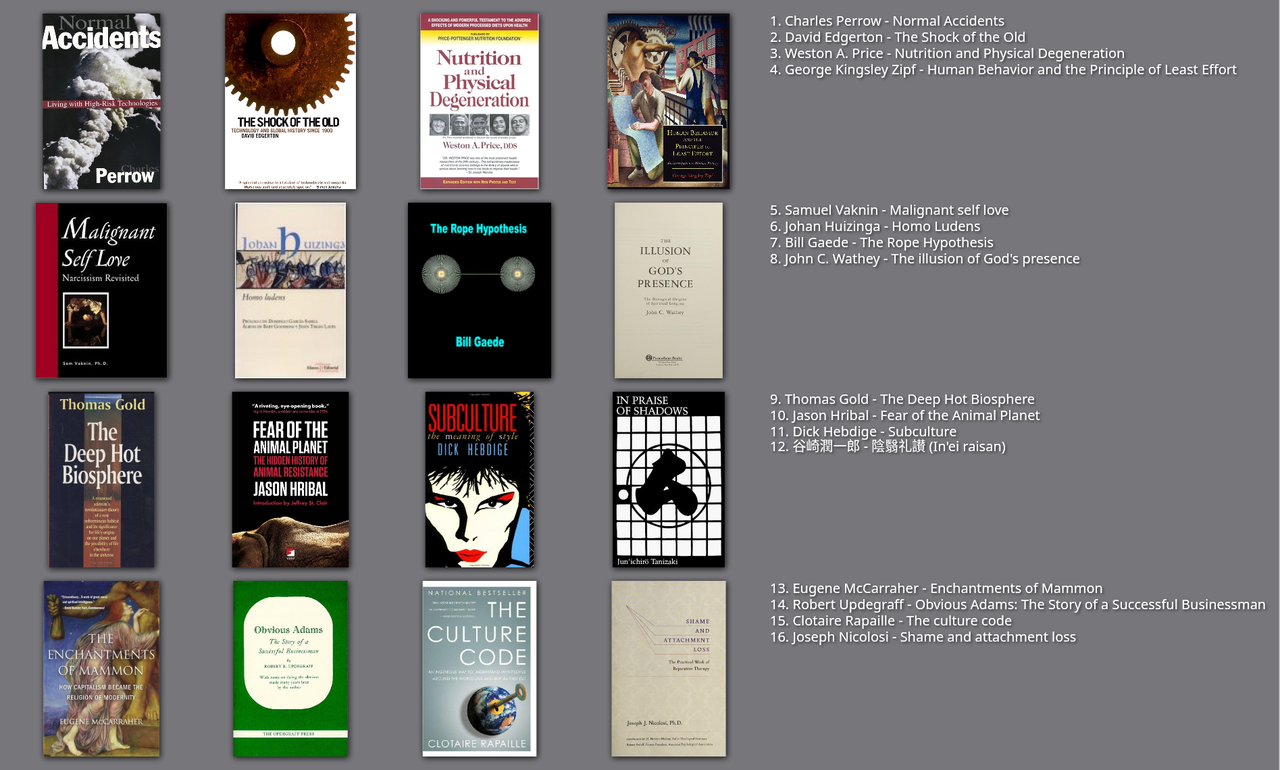
This is to say that you want to have a wide, expansive imagination, and an emphasis on first principles – rules that will almost always apply no matter the context. Read Charles Perrow, not Václav Havel.

So when I say that “I THINK” that mass politics is outdated, that’s not to say that there isn’t some creative way to use the allists for some end, or even to take down the entire system as a whole. “I think,” but I’m willing to be surprised.

So first and foremost, let us raise our standards on what ‘will’ happen, and what ‘is’ politically plausible.

Your computer is an object. It is physically connected to all other computers on the internet. An email that you send from New York is received by a man in Norway. This email physically changes the patterns in the man’s brain. The man goes out into the world forever changed: his routines are altered.

So the internet is not ethereal, it is physical – as physical as distributing flyers or hosting a fundraiser.

This object, the internet system, is interesting for several reasons: it contains all of recorded knowledge, it allows one to parse this knowledge economically, and it connects people together.

Without the internet, white nationalism would be completely impossible. All information would be mediated through centralized services, and it would be difficult to percure information and make any sense of it. People like us would also be too few in number to develop any sort of dissident consciousness.

So from this we see that increased ‘mind-bending technology’ has resulted in more white nationalism, and has also made it more sophisticated.

So the internet is giving us something, but no one sees it. White nationalists have their “online” life that they think is not real and not serious – and they have their “real” activism located on grass among 3-dimensional people. These include:

  • Starting a white neighborhood

  • Starting a secret society

  • Protesting

  • “Networking” IRL (in other words, going to dive bars and then never hanging out again)

  • Raising a family

  • Hosting a fascist art show

  • Starting a homestead

  • Getting a job

Obviously, none of this stuff pans out.

So they don’t take the internet seriously, and then they find that real activism is larpy and has no power to it. Sure, they try to move up in the world, but there’s no coordination, and it’s going to take a long time, and most of us are not able to get into the upper strata anyways. …And so they just sort of use the internet for stupid nonsense like Radfem Hitler tea.

George Zipf

zipf

Zipf says:

  • All systems economize for least effort.

  • All of our decisions are intended to minimize the total average amount of work.

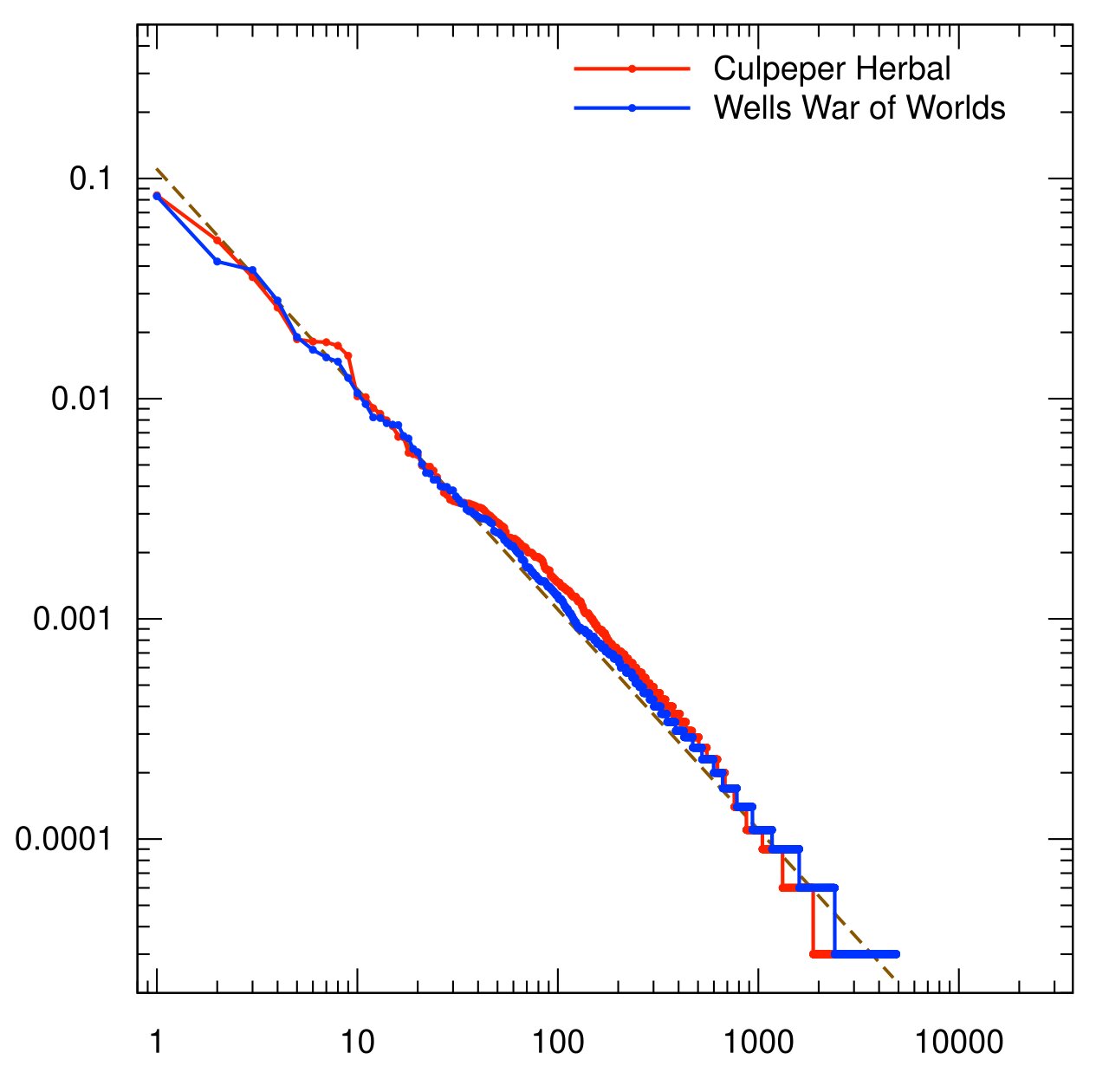
  • City layouts, language, tool usage, and thinking are all highly economical and result in harmonic distributions.

  • When speaking we use many short words that have many meanings and few long words that have highly specific meanings. This creates a straight slope:
slope

  • Even infant gurgling and schizophrenic speech produce harmonic slopes.

  • Our perception of least effort is determined by our needs, our beliefs, and our available resources. White nationalism is less effort for a white nationalist; Marxism is more effort for a libertarian.

  • Given stable conditions, systems become more economical over time. Ex: primitive tribes acquire traditions that improve crop yields while reducing input labor.

  • Systems use “tools” to perform “jobs.” The matching of tools to jobs and jobs to tools is, again, economical. Ex: a factory that produces bombs retools its equipment (“tools”) to make lamps (“jobs”) when the war is over. Retooling equipment is more economical than starting from scratch. Ex: Steve Jobs demands special equipment to produce the perfect Macintosh screen.

  • We try to arrange our tools so that those most frequently used are easier to access. We also try to use them to perform as many jobs as possible. Ex: a Swiss army knife kept in one’s pocket at all times. The knife is readily accessed and performs many jobs.

Intelligence vs. Strength

After synthesizing Zipf, ChatGPT came to the following definition of intelligence:

  • Intelligence means economy of action. It’s the number of operations that an object can perform. A crow uses one brain to solve many puzzles.

  • Few tools → many jobs

  • Intelligence is a matter of opinion or comparison. A mushroom seems stupid until we consider its root networks. IQ compares you to other test takers.

shikamaru

  • Intelligent people are known for their laziness. Shikamaru accomplishes many goals (jobs) using as little effort as possible (tools).

From this definition I arrived at the definition of strength:

  • Strength means concentration of action. It’s the number of objects performing an operation. A deadlifter uses many muscles to perform one job (lift the barbell).

  • Many tools → few jobs

  • It is the opposite of intelligence.

rock lee

  • Strong people are known for their hard work. Rock Lee uses all of his energy (tools) to perform few, quixotic tasks (jobs).

White nationalists approach their activism from a philosophy of strength. They look at all apparent forms of activism and think to themselves: “If only we had more people doing X Y and Z.”

This is many tools → few jobs

For them, studying is airy-fairy. Real change happens when you get out and “DO something.”

A Prison Analogy

Your political movement is, metaphorically speaking, locked in a small, steel room. All apparent forms of escape have been controlled for. In other words, every escape method that came to the prison architects was designed out of the cell.

Well, your crew is impatient. They want to get out of this cell right now. There’s the door, and while kicking it doesn’t work, it is the only way out that is readily apparent. So they decide to kick it harder.

What happens? Nothing. Because the architects already knew that people would try to do that. So most of the crew does not get involved – that is a waste of effort.

But the ironic part is this: those still kicking the door are irritated by their comrades’ apathy. And in their mind, they could kick the door down if only they would get up and help.

If you’re in a steel box and all you have is a hair, you must use this hair cleverly.

Money, Intelligence, and Power

  • Power means ability.

  • Money increases one’s range of possible action. So money increases one’s power.

  • As does studying. More info → more possibilities, more money

  • Studying makes it easier to guess trends and thus the market.

  • Power, wealth, and knowledge are all tightly coupled. Get one, and the others follow.

So Instead:

  • Do not start from a philosophy of strength. Start from a philosophy of intelligence.

  • Use the internet to access all of recorded knowledge.

  • Use AI to parse this knowledge economically.

  • Learn eclectically and purposely; do not methodically read a canon so that you can say “I have read it.”

  • Have a meta-perspective on white nationalism as a dialectic that changes over time.

  • Take studying to a virtuosic extreme, in the way that Buckethead has taken his guitar.


The internet is the authentic political space. While it is humble, decisions made here have tangible feedback. It is a third place, it mediates real communities, and its potential has hardly been explored.

I didn’t see this

https://www.patreon.com/bloodsatellite/posts/real-secret-103-152030996?collection=1470069

Spirit of the Guitar

So Dimes responded to my post, but I actually didn’t know about it until recently. Timeline:

Mar 02, 2024 - Dimes’ original post
Feb 21, 2026 - My OP
Mar 2, 2026 - Dimes responds
Sep 18, 2026 - I respond now


image

Virtuosity is the idea that white nationalism should be centered around extreme, economical studying. It encompasses a wide range of beliefs, which are selected according to their utility in acquiring important information.

We strengthen what we economize towards, and we neglect everything outside of it. For instance, a man who primarily cares about his career begins to neglect his family. In the same way, Virtuosity is blind to everything that doesn’t have some practical purpose. A typical white nationalist would care a lot about his masculinity. But to a virtuoso, sensitivity may reveal truths that can be useful – because impressing girls etc doesn’t matter.

Or take religion: a pagan might criticize Christianity for being Jewish / subversive. That wouldn’t matter to a virtuoso as much as “Is Christianity true?” Because starting from reality is important.

It is basically extreme, utilitarian white nationalism – white nationalism in a hyper-economized state. And it tends towards hardcore, materialistic thinking (in the vein of Bill Gaede), syncretic politics, sensitivity, perfectionism, an eclectic study habit, and a big emphasis on humility.

image

Virtuosity is not just a hypothetical that I am proposing. It is my entire lifestyle. I am working on problems at all hours of the day. I bring my writings into work and edit them there. It is not boring, it is a rush and every day I am very excited. People have no idea how exciting studying can be when there are no rules. You figure out a problem, then connect the answer to another problem, and so on. Every few days, a new revelation appears. Currently I have a manuscript that’s about 300,000 words. I edit it on paper when I’m at work, and the draft itself is about 78k.

Virtuosity’s main metaphor is extreme music – or extreme proficiency generally.

It is not a quiet mental affair. It is more like a mania. Reading half a book and then off to the next exciting thing.

I also compare it to gold prospecting. A bad prospector picks one site and then extracts every grain and speck of gold out of it. A good prospector samples many sites to get the “gist” of the terrain. Then he chooses the best site. So I only read the parts that I think are important, and then I move on. If I’m wrong, then someone will angrily correct me. And in this way, that person becomes an extension of me. (This is why humility is important).


With this in mind, let us examine this old debate: is it more productive to focus on theory, or real-life activism? One’s first conclusion would obviously be “Balance these two economically.” You need information, but you have to actually do something with it. So yeah, study, etc, but also do things in real life like X Y and Z.

I was not satisfied with this answer, and I think after listening to Dimes’ response I was able to articulate what exactly my problem was.

The problem, as I see it, is that there’s tactics but no strategy. It is people doing stuff. There is no obvious “Aha!” that everyone clearly gets, produces obvious results, and thus gets everyone excitedly out doing it.

Remember Shia Lebeouf and He Will Not Divide Us? Look at how active everyone became when that happened. You had a very simple idea (ruin Shia’s exhibition), and suddenly everyone got out of their chairs and went down to New York.

image

That is how it works now. You don’t have a guy telling everyone what to do. It’s like someone DOES something (something funny or amazing or actually really effective), and then people imitate.

Solid strategy → spontaneous involvement

It could be a million times easier if you just came up with a really fine strategy. But how will you know when the strategy is ready? When it’s OBVIOUS!

image

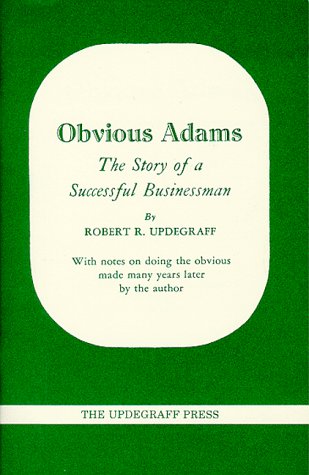
As pointed out in the short story Obvious Adams, success in business is all about seeing the obvious. It’s just that it takes a lot of hard work before you notice it.

There is a spectrum between gambling and obviousness. A slot machine is gambling whereas picking up a glass of water is obvious. There is always a chance that you drop the glass – but it’s a pretty sure bet that you’ll pick it up successfully. This is why Warren Buffet passes on thousands of companies before he ever picks a stock – it’s gotta be perfect, impossible to fail.

If there is even a question about the efficacy of a strategy, it’s not ready. It should completely turn the tables on the entire political affair. And that means it has to be the fruit of a great research project – either by a single guy or by a group of fanatics.

This is to say that the strategy should be the primary concern, and the tactics should be secondary. One guy could wipe out an entire army if he only knew how. With few friends and a gay political system, strategy is inordinately important.

Leftists have all of the power and money and connections. But they’re also arrogant, out-of-touch with reality, and have trouble with change. If their weakness is stupidity, then shouldn’t our strength be intelligence?

I feel this also suits our character much more. Europeans are innovators.

You have to admit that the limits of internet autism haven’t really been explored.


On Strength and Intelligence

Dimes, I don’t think you understood my point about intelligence and strength.

In Zipf’s view, any thing can be a tool, and any operation can be a “job.” For example, a word is a tool that can be used to perform the job of communication.

I realized that there was a connection between the Tool Analogy and the definition of intelligence, so I asked ChatGPT. ChatGPT suggested that it was the ratio between the two, and it actually makes a lot of sense.

I understand that there are many problems with AI, I’ve dealt with hallucinations myself and I don’t rely on it for certain kinds of tasks. I use it primarily for reasoning and summarizing texts, although I did not use it to summarize your article.

Sometimes, ChatGPT says stuff that’s actually really fucking smart. And it’s very surprising.

You can define intelligence as “the ability to do hard things with your mind” and strength as “the ability to do hard things with your body.” But you can also abstract these very same definitions into Zipfian terms and get the same result. In both cases, you’re still talking about a ratio between jobs and tools, and I think this definition is more illuminating. Because what if we want to talk about strength outside the context of our body, or intelligence outside the context of our brain? See the paper If Materialism Is True, the United States Is Probably Conscious. Without the brain and body, surely you are talking about a ratio.

Fun read, scattered but interesting subjects.


I really love this point. It’s something one reads and in hindsight, is obvious. The internet is incredibly physical, and can completely nuke the public psyche.

I think of the recent Lindsay Clancy trial, not only are we presented with the news, like you would be with television or newspaper, but you get to see a sort of international reaction and discussion. It translates physically through multiple avenues; protests, interpersonal conflicts, maybe simply just a physical reaction like anger or contempt can change how someone reacts physically throughout their day, even to unrelated things.

This on the other hand, I would disagree with. The way I’ve always viewed it, is that White nationalism and the internet are both a product of modernity, not that WN is a product of the internet.

The internet is the ultimate form of centralism, even if it seems decentralized. Pooling everyone to touch one central object, a massive network that nearly everyone interacts with in some way. It’s a direct result of postwar globalism and the slow death of local life. The internet never would have been invented if things had stayed tribal, there never would have been a need.

Similarly, if things had stayed tribal, WN wouldn’t have been a need. WN manifests the way it does because it’s just a form of a simple idea (loyalty to an in-group), and will manifest relevant to the technology and political situation of the time. The idea that a nation can include multiple races is a modern one, and so is the idea of a white nation. They used to be synonymous, a nation was comprised of a racial group.

The idea predates the ideology, it just takes the form of WN because that’s what is necessary. There would be a dissident consciousness, a group, the goal would just be different. Just plain nationalism, and before that, feudal ties, so on.

I do agree that White Nationalists’ penchant to not take online activity seriously is a flaw. It seems silly, like ignoring Nationalist newspapers to farm in the Italian countryside. While in-person activities can be more effective, they’re less likely to reach as many people. It’s a balancing act, but like you say, it’s not a balanced mix of both online and in-person activity. It should be whichever is most effective. If you can influence 10 people 100% in-person, and influence 10,000 5% online, you should focus on online activity.

^For example.


War was always here. Before man was, war waited for him. The ultimate trade awaiting its ultimate practitioner.

I see. Thank you, kitty.

Well, I’m actually not a populist. I feel like a vanguard shouldn’t concern itself with converting the normies.

I think that information can be used to do WILD things we haven’t even thought of yet. It’s just that those things require extreme autism.

Listen to the story Understand by Ted Chiang. I know it’s just a sci-fi story, but I think you get what I’m trying to say here.