
In capitalism, profit is king, not quality. Capitalism gives you what you want – but just barely. So long as the customer does not notice, a business will continuously reduce its expended effort until it is mature.
This simple fact is absolutely crucial when attempting to rebel against society. Whether you are a leftist, a fascist, an anarchist, or anything in-between, you must understand that capitalism provides the minimum tolerable quality of service.
The poor quality of a product or service opens up new commercial opportunities. And so the products and services that mediate society are always changing.
Why is this important?
Well, because you’re a larper. Your anarchist book club doesn’t actually matter, because you do not have the means to “go pro,” or develop authentic structures of resistance. Every time you try to start a political party, or a paramilitary organization, or a “parallel institution,” the thing is a larp. It is like planting a tulip in the Sahara desert.

A perfected routine is a routine that developed through a lengthy process of trial and error. It is the difference between your first trip to the grocery store and your 30th. It is the basis of community, authenticity, human health and happiness, and yes, mass movements.
When the true radical starts his anarchist newspaper, the process is wholly organic, and does not rely on signs. You meet precisely the right people, you identify an authentic community need (not an imagined one), you make use of available materials, and people actually read the thing and do things with it.

I go to the mall to get writing done. There has always been a seating area in a quiet section near the H&M. Recently, they moved the seating area to an uncomfortable location in the main foot traffic. Thus my routine has been disrupted. I cannot develop a relationship with the space, meet regulars, or properly time the hours where this space is unoccupied. I have to change my plans, and start over from square 1.
All modern radicalism is interrupted in this way. The routines that comprise the radical’s activities, opportunities, and social life are always being lost through the opening and closing of establishments. The university sucks, so people go online. The coffee shop closes, and gets replaced by another. The third places disappear, and people stop going outside.


This process also distorts the internet. The online space, held hostage by social media, is continuously disturbed. Internet culture is replaced with an algorithmic recommendation system.
Since radicals cannot actually build anything, they turn to self-expression. They complain, they roleplay, they start a Patreon. And so the activism is sublimated.
It is safe to say that perfectionism is deeply reviled in our society. The mental health issues of perfectionists obscure any fair or rational analysis of the benefits of such thinking. This is very interesting given that perfectionism was always the dominant theory of production.
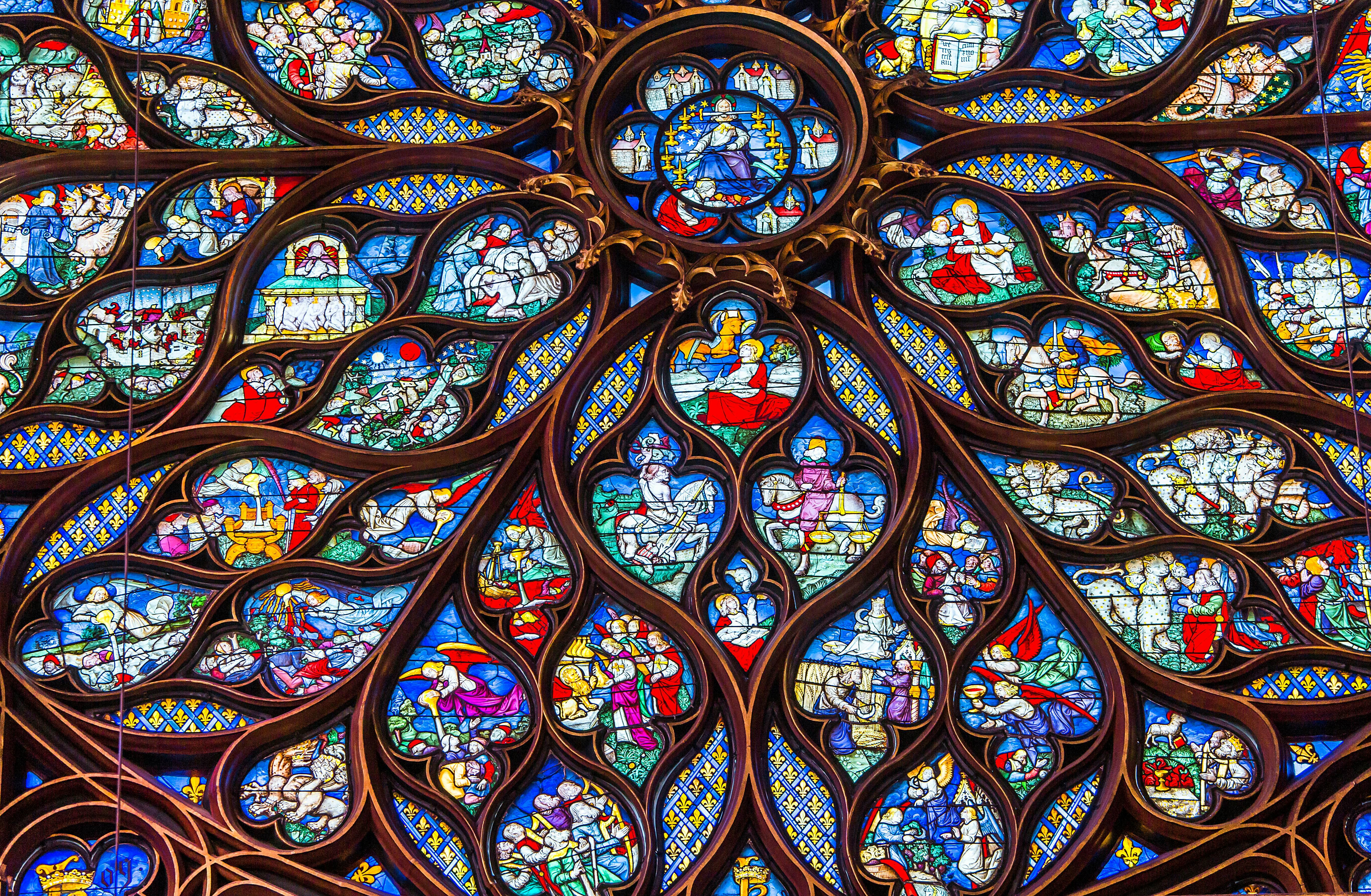
I suspect that capitalism creates a bias or norm where quality is viewed with suspicion. All the social messaging comes from entrepreneurs and business owners, and guess what: they think perfection is some “unattainable abstraction” that no one can ever hope to reach. (In reality, perfection is just a feeling, but I digress).
Perfectionism is anti-capitalist, because quality objects and routines cannot be easily changed. Think about it: if a car manufacturer made a surplus of cheap vehicles that never ever broke, that economic slot – that is, the basic, reliable car – would no longer be produced (at least nowhere near the same extent). To make a car industry, you need problems. The cars break, the cars can’t be fixed, the cars are irritating to use, not enough features, not enough comfort, not the right color etc etc. You point out a problem, and provide the solution.
So for any organizing activity to afford the peace of mind necessary to become a threat, it has to be so good that nothing can ever compete with it. Be Studio Ghibli – not Disney or Pixar or Nickelodeon. The theory of production has to be quality, not “good enough-ness.”
Nobody would ever bulldoze the Sistine Chapel. Nobody would ever think to put a new church on top of it. The most that anyone can do is sell tickets.
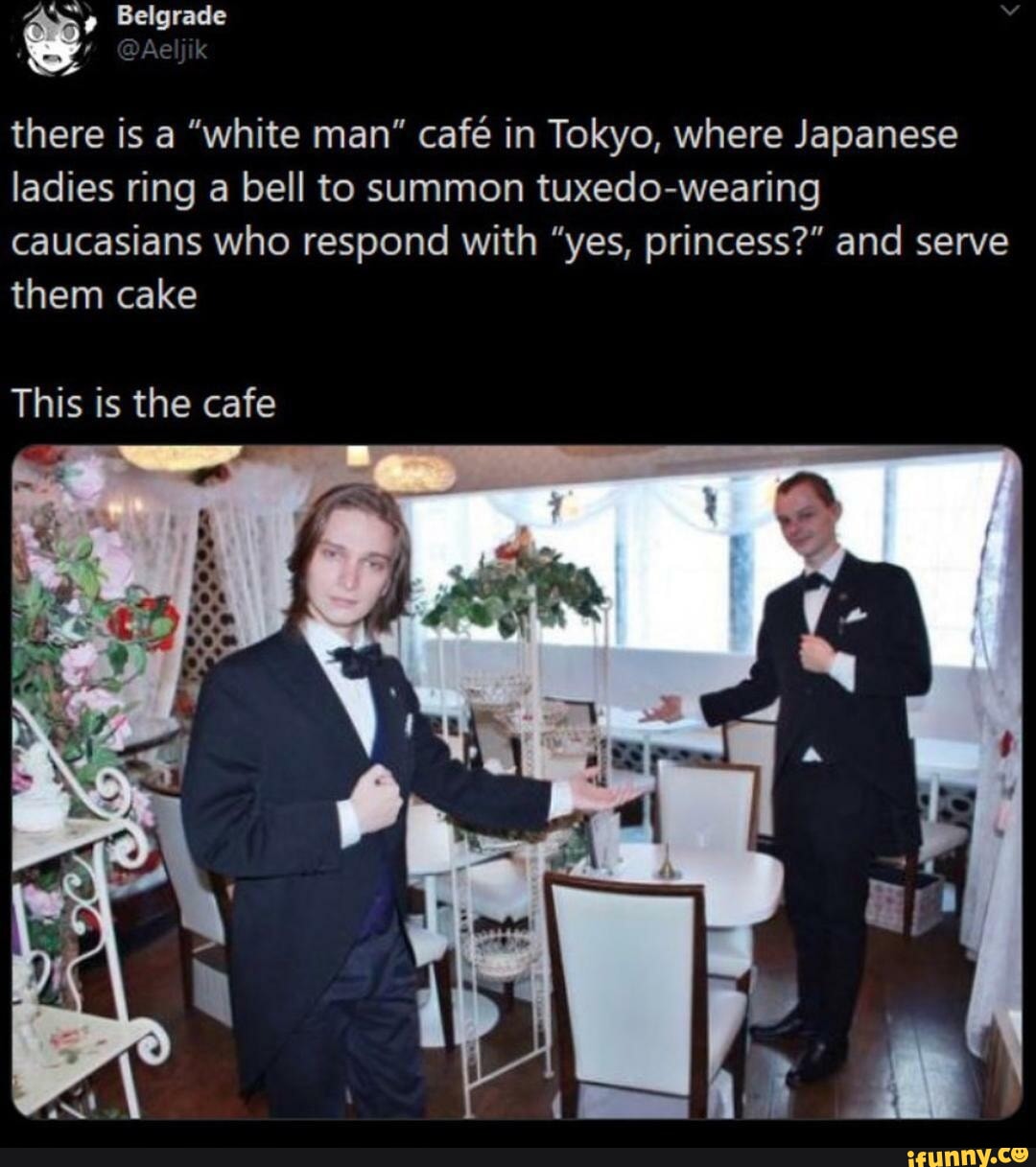
Now, take a look at Japan. Why is Japan “weird?” Well, some people have argued that it’s just exoticism on our part, and to that I say you probably haven’t studied the culture very much. Japan is fundamentally different from the rest of world in almost all respects. It’s not just some paper-thin “aesthetic” or artifice concealing a secret white person. This is a country where 90% of adoptions are adults – not children. This is a country that gave us “white men” cafés.
Other people have argued that Japanese weirdness is a reaction to the “boring,” “conservative” work culture that restricts personal autonomy and freedom. That is far more credible, but countries like that already exist. There’s China, and India, and Saudi Arabia, and we don’t see the “weird” crop up at all in those places – it’s nowhere near the same degree. To put it another way, it doesn’t take very long to get used to Turkmenistan; it doesn’t take very long to get used to Paraguay. Japan is always shocking.
The main reason why Japan is weird is because it is a perfectionistic society. Westerners cannot understand this, because they have no eye for detail. The perfectionism of the white man is more ideological – it appears when he pursues some fantastic dream, but it is not natural to him. For example, a Westerner could not comprehend why Japan would bother to make such a minor modification to its national flag:

That’s because detail does not come naturally to him. Japan is a country where resources were always scarce, so people just naturally evolved to make the most of what they had. And so if you watch any of these people do something normal like build a beehive or tie their shoes or stack firewood, they’ll turn it into a fucking science project. The Germans have nothing on these people.
So anytime a resident gets a weird idea in their head, they force it to work. They revise every aspect of the operation until it blends seamlessly with the environment.
So if you want to stop larping and actually make something real, you have to think more like a Japanese person (save for their reluctance to actually rebel). You have to revise and perfect something.
I use the term locus of perfect to denote the object of a perfecting process – it is what one revises towards. For capitalism, that’s the proliferation of its central meme: “Make money.” Capitalism is trying to figure out how to produce this meme more efficiently, and to do this it experiments with this or that. It acquires new knowledge, new techniques.
As one revises the locus, all other things strip away. The man who only cares about his passion projects eventually forgets that he has a wife and three children. And for capitalism, it is our quality of life and our routines that are stripped away. So capitalism is revising us out of the picture.
For the radical, what is his locus? The traditional forms of activism do not seem to work, so what is it that he should be revising? I argue that this is his group dialectic – it’s the consensus of opinion within his circle of activists. Capitalism is an idea-system. It controls the objects on the board – the schools, the businesses, the politicians, and the property. Since it is not easy to play on the board, we start at the level of ideas. We have to develop, through revision, those forms of activism that will perfectly address the current material conditions. Organizing means on the internet, in a stagnant space – a forum. The online IS the authentic activist space – not the IRL, not “touching grass” – the internet.
You create some ideology that is really easy to follow. Make it center around studying, humility, and having a very open mind. And promote essentially a kind of virtuosity. You want to be like a really advanced technical player, able to figure out difficult problems with relative ease. You perform an eclectic “free-study” with others of the same intentions, and from that – from that collective intelligence, that collective brutality of work ethic – your community “sharpens the knife.” And as it revises towards this goal, whatever it is, the solutions emerge organically.
I call this point of view “Virtuosity.”