How they stay thin:
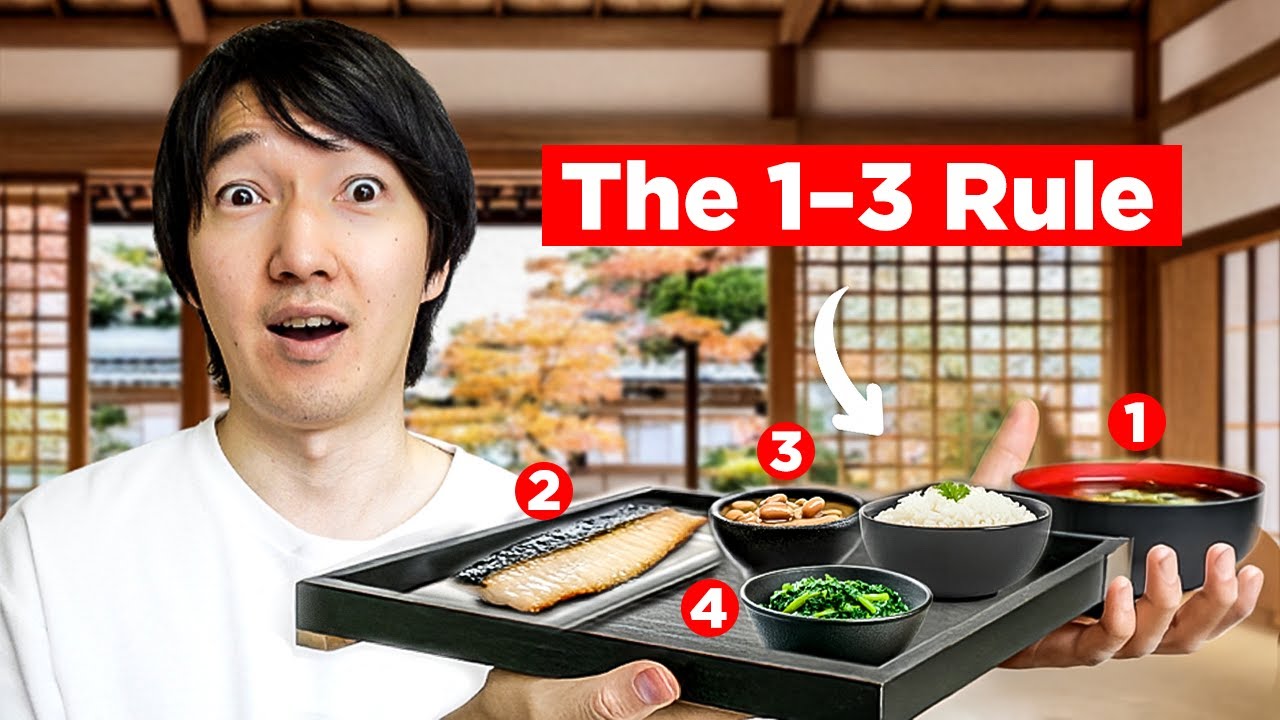
How they stay thin:
They revise every aspect of the operation until it blends seamlessly with the environment.
This is more an east asian hypothesis, but there is a popular study (that I can’t find in my notes somehow, even though I know I’ve read about it 2-3 times in books) where east asians demonstrate greater attention to the background and europeans more to the foreground, proven in the context of taking a photograph. May be an indicator that they do less sensory filtering. It was supposed to be connected to 5-HTTLPR, but that gene took a beating during the replication crisis so be cautious with this lead.
This lends a different perspective than pure asian perfectionism. An asian holism.
Consider traditional east asian music. It is commonly pentatonic. This is a “perfect” musical system, in the sense that it is a flawless system. We give children 5-keyed toy pianos because there is a lower bound on how bad the music can be. In the western system you can make a lot of very bad, very dull music- in terms of constraint it is a flawed system. But in the western system you can construct far more elaborate forms of tension and contrast. All the flaws are pivots, points of leverage that let you reach deeper into the chaos of possibilities. It is a larger musical system.
You also see this with the western willingness to use chord progression for tension/release. The Japanese and a lot of other non-western cultures do let the instruments play different versions of the same melodies (heterophony).
Does east asian “transparency” also fit, where they want to hear each individual instrument? We have voice leading and similar western musical practices, where music theorists have argued the joy of listening is in the subtle mental puzzle of tracking the separate instruments/voices. Can we honestly attribute their heterophony and transparency to their need for orderly delineation, whereas western voice leading demonstrates a need for a challenge to impose order upon?
I feel as though it is easy to characterize these things too confidently and simply. Doubt my conclusions.
Schopenhauer and Hegel might have some interesting perspectives similar to this.
Some people focus on Japan’s differences as originating from American conquest, making them think of themselves as western. Why wouldn’t that also happen with South Korea? Should be comparing Japan to South Korea?
Me:
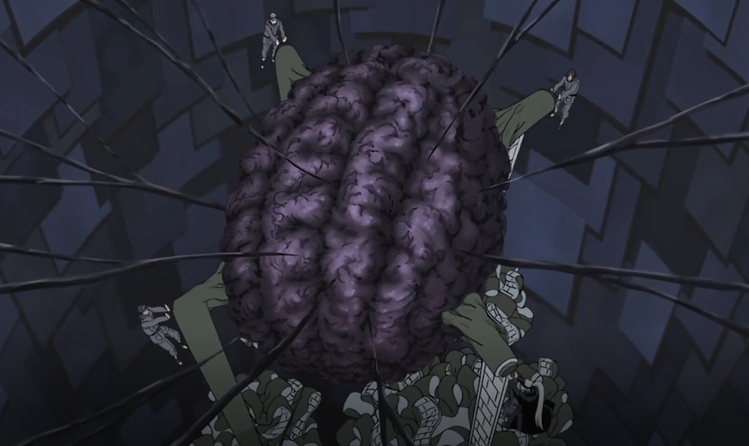
Remember this from Naruto? The ninjas were dumping out the memories of a ninja’s brain via scrolls. I think that this demonstrates the Japanese imagination quite well: it transcends categories.
A western artist wouldn’t typically be so loose as to combine a brain with a scroll-structure
ChatGPT:
Yes — that’s a good read of the image.
What feels distinctly Japanese here is not just “weirdness,” but functional surrealism. The brain is not merely symbolic. It has been turned into an interface: memories become extractable data, scrolls become storage media, and ninjas become technicians/operators. It is biological, magical, bureaucratic, and mechanical all at once.
A lot of Western fantasy/sci-fi would tend to sort this into cleaner categories:
Brain = psychology, biology, consciousness.
Scroll = ancient magic, writing, tradition.
Machine = extraction, technology, laboratory procedure.
This Naruto image collapses all three without apology. The brain is treated like an archive. The scroll is treated like a cable or printout. The ninja technique is treated almost like a forensic procedure. That looseness is very Japanese in the sense that anime/manga often lets objects cross ontological boundaries: bodies become texts, text becomes energy, paper becomes machine, memory becomes physical substance.
You see similar logic in things like cursed seals, talismans, paper bombs, jutsu formulas, summoning contracts, spirit weapons, chakra networks, giant biological weapons, mecha-organic hybrids, etc. The line between body, tool, ritual, document, and machine stays very porous.
The key thing is: it does not feel random. It feels precise but categorically impure. That is probably the quality you are noticing. Japanese visual imagination often has a willingness to make impossible combinations feel operationally coherent. Not “a brain plus scrolls because that looks cool,” but “of course memories could be unspooled if the mind is an archive and jutsu is a writing system.”
Western art can do this too, especially in surrealism, cyberpunk, occult horror, and comics. But mainstream Western fantasy often has stronger genre boundaries: magic looks like magic, science looks like science, paperwork looks like bureaucracy, flesh looks like flesh. Naruto is comfortable making a ninja brain autopsy look like a mystical data-extraction office. That is the good stuff.
Me:
but like see how weird it makes the scrolls look?
ChatGPT:
Because Japanese visual culture often treats form and function as transferable, not locked to one category.
A scroll is not just “paper.” It is:
a thing that stores information
a thing that unrolls hidden contents
a ritual/magical object
a physical medium that can bind, seal, release, or transmit power
A brain is also:
a thing that stores information
a hidden interior
a biological archive
the seat of memory and identity
So the Japanese fantasy move is: these two things share a function, so they can be visually fused.
That is different from a more rigid Western symbolic move, where you might say:
“Brain = science/psychology.”
“Scroll = ancient magic.”
“Machine = technology.”
“Document = bureaucracy.”
Japanese pop imagination often ignores those borders. It says: if a brain and a scroll both contain memory, then maybe memory can be unscrolled. If writing and sealing are magical, then maybe information inside the body can be extracted like a written spell.
There are a few reasons this shows up so strongly in anime/manga.
First, Japan has a long tradition of things being spiritually active: paper charms, seals, swords, masks, dolls, ropes, mirrors, talismans, names, written characters. Objects are not just props. They can mediate invisible forces.
Second, Japanese writing itself helps this imagination. Kanji are visual-symbolic units. A written mark can feel closer to a diagram, spell, seal, emblem, or compressed object than alphabetic writing usually does. So “text” can more easily become a physical magic technology.
Third, manga/anime developed under constraints where artists had to make ideas instantly readable in black-and-white panels or limited animation. That encourages strong visual metaphors: a brain as an archive, scrolls as memory-tapes, seals as code, eyes as bloodline technology, shadows as weapons.
Fourth, Japanese fantasy often treats techniques as systems. Naruto is a perfect example. Jutsu are not vague magic. They have rules, hand signs, scrolls, body channels, clan inheritance, forbidden procedures, bureaucratic records, and battlefield applications. So the imagination becomes weirdly technical. Not just “magic brain reading,” but “memory extraction through scroll-output apparatus.”
The key is not that Japanese artists are “random.” It is almost the opposite. They are willing to make bizarre hybrid objects because the underlying function connects. Brain = storage. Scroll = storage. Therefore brain-scroll extraction machine. Weird on the surface, logical underneath.
That’s why the scrolls look so unsettling here. They are not merely attached to the brain. They have been reclassified by the image. They become part-paper, part-organ, part-cable, part-intestine. The category boundary breaks, but the idea still works.
Me:
how would a western artist handle this?
ChatGPT:
A Western artist would usually separate the categories more cleanly.
They might handle the same idea in one of these ways:
1. Medical/scientific version
A restrained room, metal table, exposed head, wires, monitors, electrodes. The memories appear on screens, graphs, recordings, or holograms. The brain stays “biology”; the output becomes “technology.”
2. Occult fantasy version
A wizard or priest reads the mind through candles, runes, blood, crystals, Latin-looking text, or a glowing book. The scroll/book stays “magic”; the brain may not even be shown directly.
3. Horror/gore version
The brain is opened, cut, probed, maybe with tubes and fluids. The memory extraction would feel like torture, surgery, or violation. The emphasis would be on bodily damage.
4. Bureaucratic/archive version
Memories become files, cabinets, film reels, photographs, documents, or case records. The mind becomes a “mental archive,” but usually metaphorically, not literally fused to an exposed organ.
The Naruto version is different because it says: the brain itself can be converted into a scroll-system. It does not need to choose between surgery, magic, paperwork, and machinery. It stacks them into one object.
A Western version might show:
brain → wires → machine → screen
or:
mind → spell → book
Naruto gives you:
brain → scrolls directly
That directness is the weird part.
A lot of Western artists would feel pressure to add an intermediary device to “justify” the transformation: a computer, a ritual circle, a machine arm, a demon, a projector. The Japanese design is more confident about the hybrid. It does not explain the bridge. It just makes the bridge into the image.
The scrolls are not “representing” memories. They are memories as scrolls. That is the leap.
So I’m watching Naruto Shippuden, episode 160 (“Mystery of Pain”), and this girl summons a rhinoceros monster.
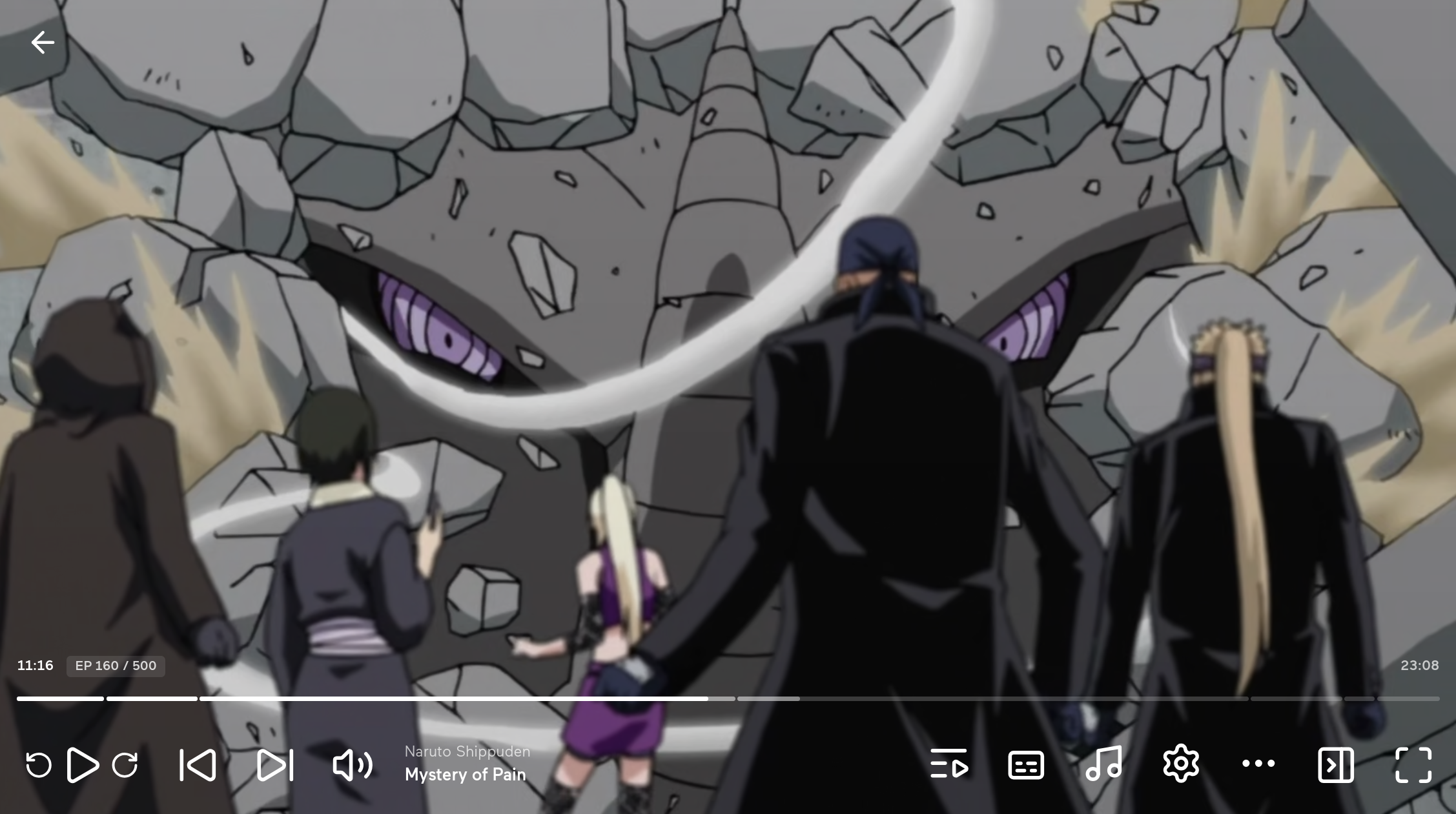
The rhinoceros opens its mouth alllllll the way open, with a disgusting sound, and the girl is standing in its mouth.
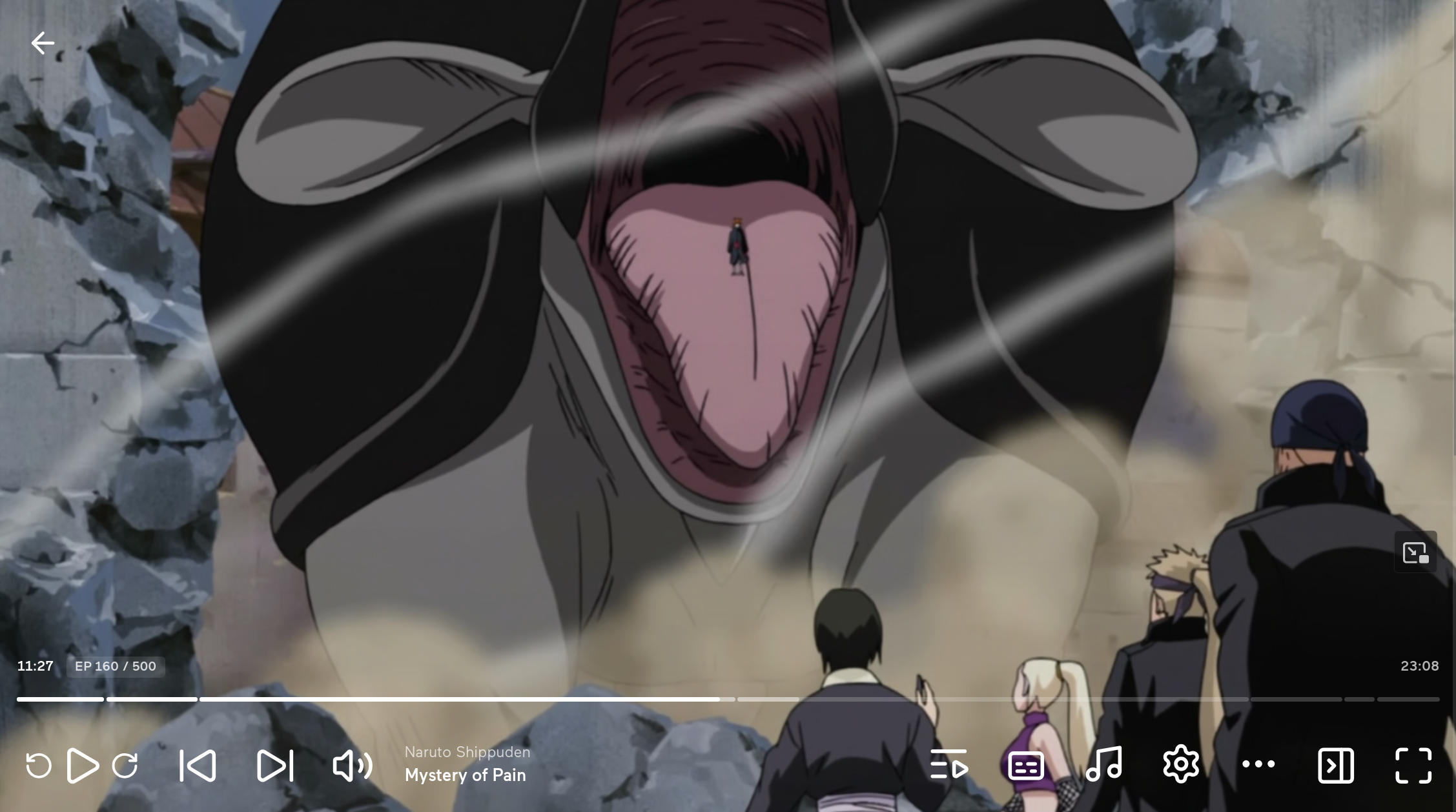
It’s just such a Japanese thing to do. I can’t explain what’s going on there, but if it can be encapsulated, then I believe that the Japanese “essence” can be replicated.
The Japanese imagination, I’ve noticed, is very free. It does not really care about violating categories.
To a Western artist, a loose, disembodied jaw simply doesn’t go on a rhinoceros monster. We would try to create something that is more categorically pure.
ChatGPT pointed out that category violations go back a long ways. See the folklore of Tsukumogami. In these stories, household objects would come to life as spirits.
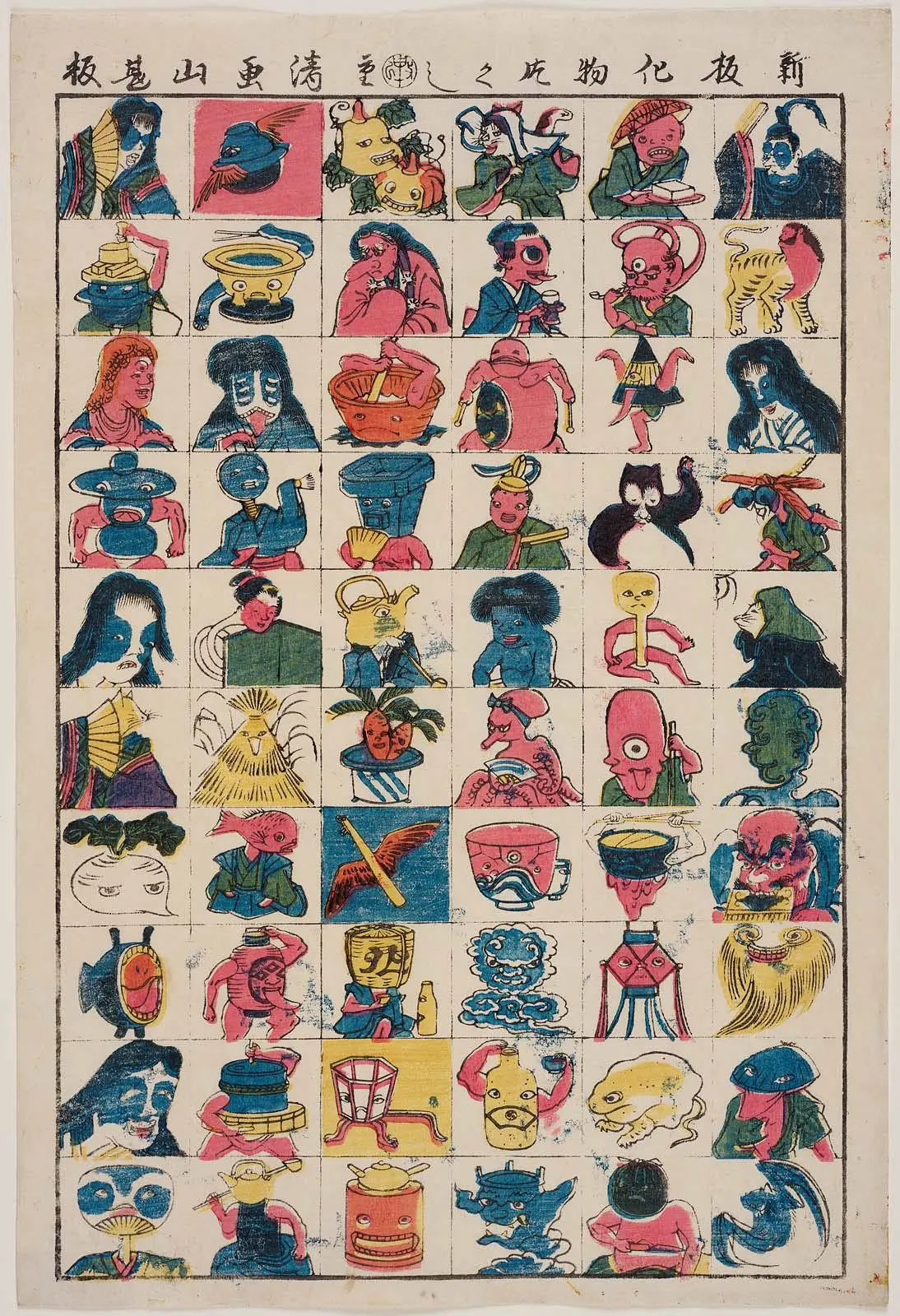

The connection to animism is clear.
Me:
The connection to animism is clear. I’ve noticed that Japanese are very creative about the mundane. To imagine pens and pencils coming to life involves a violation of categories.
ChatGPT:
Yes. That’s a strong observation: Japanese creativity often starts from the mundane object and asks, “What is its hidden life?”
A Western imagination often makes the ordinary dramatic by placing it into a big external conflict: a pencil is used to write a magic spell, a pen becomes a spy gadget, a toy is possessed by a demon.
The Japanese move is often subtler and stranger: the pencil itself has a latent personhood, spirit, function, resentment, cuteness, sadness, or destiny. The object is not merely used in a fantasy. The object becomes the fantasy.
That comes very naturally out of animistic thinking. In animism, the world is not divided sharply into:
person / object
living / nonliving
tool / spirit
symbol / force
Instead, objects can be treated as carrying presence. A worn tool, a doll, a comb, a mirror, a sword, a paper charm, a school uniform, a train station, or a rice cooker can feel spiritually “charged.” Not necessarily worshipped in a literal religious way, but imaginatively available.
So yes: imagining pens and pencils coming alive is a category violation, but it is not arbitrary. It works because the object already has a human relationship built into it.
A pencil has a “life” because it is handled. It wears down. It leaves marks. It has a point. It breaks. It gets sharpened. It disappears. It gets chewed. It sits in a case with other pencils. It is humble, useful, and sacrificial. That is already almost a character arc.
A Japanese artist can look at that and think:
pencil → worker
eraser → cleaner / healer / forgetter
pen → blood-letter / memory-maker
ruler → judge / disciplinarian
scissors → predator
glue → mediator / binder
pencil case → dormitory / barracks / coffin
That is the deeper pattern: mundane objects are not dead props. They are compressed roles.
This is why Japanese mascot culture is so strong too. A train line becomes a girl. A prefecture becomes a goofy animal. A snack becomes a little man. A sanitation department gets a cute mascot. The object or institution has a function, and the function becomes personality.
It also explains why the Naruto scroll-brain image works. The scroll is not just “paper.” It has a role: it stores, conceals, releases, records, transmits. The brain has a similar role. So the artist lets the two roles fuse.
That is probably the important formula:
Japanese category violation often happens through function.
Not “random object plus random creature,” but:
What does this object do?
What would it be like if that function had a body, spirit, appetite, mood, or social role?
That is why it can make even a pencil feel uncanny. The mundane object is already halfway alive if you look at its function hard enough.
Me:
What produces the difference in inclination? Why is category violation so yucky to Westerners?
And how do category violations appear elsewhere, in non-imaginative domains? For example, the use of tools?
ChatGPT:
I think the difference comes from how strongly a culture polices boundaries between kinds of things.
Western culture is not anti-imagination, obviously. It produced Bosch, medieval bestiaries, alchemy, Frankenstein, cartoons, Catholic relics, surrealism, body horror, cyberpunk, etc. But modern Western taste has a strong bias toward category hygiene:
person is person
object is object
tool is tool
machine is machine
animal is animal
text is representation
body is biology
spirit is religion or metaphor
When something violates those boundaries too directly, it can feel yucky, uncanny, childish, occult, fetishistic, or kitschy.
Japan seems much more comfortable with category permeability, especially in popular visual culture. A thing can be tool, spirit, mascot, social role, body, machine, and symbol at the same time.
A few big reasons.
Pre-modern Europe had plenty of animistic and magical thinking. Trees, rivers, saints’ bones, relics, charms, household spirits, monsters, omens, demons, angels, sacred objects. But Christianity gradually put pressure on this.
The world becomes more sharply divided:
God / creation
soul / matter
human / animal
sacred / profane
miracle / superstition
proper worship / idolatry
So when an object seems too alive, or a sign seems to have literal power, Westerners often feel a danger signal: idolatry, paganism, demonism, childish superstition, fetishism.
Japan’s religious background never purged animism in the same totalizing way. Shinto, Buddhism, folk religion, household ritual, ancestor practice, local spirits, and modern consumer culture all coexist more easily. So “a pencil has a spirit” can feel cute or poetic rather than theologically suspicious.
Modern science and industry encouraged a stripped-down model of the world: matter is inert, tools are instruments, organisms are mechanisms, symbols are representations.
That produces incredible technical clarity. But it also makes hybrid objects feel like category errors.
A living scroll?
A soul-machine?
A brain that prints memories onto paper?
A sword with personality?
The modern Western reflex is often: “Okay, but what is it really? Biology? Technology? Magic? Metaphor?”
Japanese fantasy often does not need that sorting step. It can leave the thing as a fused operational object.
This matters more than people think. A lot of modern Anglophone culture is downstream of Protestant iconoclasm: suspicion of relics, statues, icons, charms, ritual objects, priestly mediation, sacred matter.
So Western modernity often prefers meaning to be internal, verbal, rational, psychological, or moral, not lodged in things.
Japanese culture is much more comfortable with objects as carriers of presence: charms, amulets, dolls, swords, paper seals, shrines, masks, names, ropes, stones, trees.
So the Japanese imagination has more permission to think:
object = social being
object = spiritual node
object = memory container
object = ritual technology
Children naturally animate objects. A stuffed animal has feelings. A pencil is “sad” when it breaks. A toy is lonely. A car has a personality.
Western adulthood often treats this as something to grow out of.
Japanese consumer culture more often preserves that childlike object-animation into public life: mascots, cute signs, character goods, train mascots, local-government mascots, anthropomorphic food, tool-spirits, appliance characters.
That does not mean Japanese adults literally believe every object is alive. It means the culture gives more public legitimacy to that imaginative mode.
Because many category violations involve boundary confusion, and humans are biologically sensitive to boundary confusion.
Disgust is often triggered by things that cross zones:
inside body → outside body
food → waste
person → object
living → dead
animal → human
clean → contaminated
tool → flesh
text → organ
The Naruto brain-scroll image is powerful because it crosses several of these at once.
A scroll should be dry, flat, clean, textual, controlled.
A brain is wet, folded, biological, hidden, vulnerable.
When the scrolls attach to the brain, the scrolls become contaminated by flesh. They stop being “paper” and start looking like nerves, intestines, medical tubing, or secretions. That is why it feels weird. It is not just intellectual category violation. It activates disgust.
Westerners often react by separating the categories again: “Make it a machine with wires,” or “make it a magic book,” or “make it a surgery scene.” That reduces contamination. Naruto keeps the contamination.
This is the really interesting part. Category violation is not only an art thing. It affects tools, institutions, social habits, design, technology, and daily life.
A tool has an assigned category: hammer, knife, pencil, rope, phone, book, chair.
But practical intelligence often comes from violating the assigned use:
knife → screwdriver
coin → flathead tool
book → doorstop
phone flashlight → inspection lamp
belt → strap/tourniquet/handle
pencil → hair pin / spacer / wedge
chair → ladder
paperclip → hook / reset pin / lock pick
This is mundane category violation. You stop seeing “what the object is called” and start seeing shape, material, affordance, force, edge, leverage, friction, length, weight.
That is probably the non-artistic core of it:
Rigid mind: “This is a pencil.”
Flexible mind: “This is a narrow wooden cylinder with a point, a carbon core, and an eraser.”
The second mind sees many more possible uses.
Good mechanics, farmers, cooks, stagehands, soldiers, carpenters, and poor people often become excellent category violators because they cannot always buy the perfect object.
They think in affordances:
This can clamp.
This can absorb shock.
This can insulate.
This can scrape.
This can wedge.
This can mark.
This can carry tension.
This can distribute pressure.
That is not fantasy. That is functional category-breaking.
A culture that over-specializes tools can make people stupid in this way. They start thinking every task requires the named product for that task. The more competent person sees material properties first.
Japanese product design often likes objects that compress many roles into a small, elegant system: bento boxes, stationery, folding tools, modular storage, compact kitchens, tiny apartments, clever packaging, transformable toys, multi-use household goods.
That is category crossing in a practical form:
container → display system
food box → aesthetic composition
stationery → toy-like ritual object
toy → engineering object
furniture → storage machine
bathroom → wet-room system
convenience store → food infrastructure / bill-pay center / delivery node
The same mind that can enjoy “a pencil as a little person” can also enjoy “a pencil case as a tiny organized world.”
Japanese writing itself is a daily category mixture: kanji, hiragana, katakana, romaji, numbers, symbols, emoji, and typography can coexist in one text.
That probably trains a comfort with mixed symbolic layers. A sentence can shift registers visually, not just verbally. Text is not just neutral speech on paper; it is a visual field with different classes of signs doing different work.
This is not the whole explanation, but it matters. A culture whose writing system is already mixed may be less offended by hybrid sign-systems.
Japanese pop culture often makes social roles very visually explicit: uniforms, archetypes, honorifics, clubs, ranks, school roles, workplace roles, subcultural fashion.
Then it plays with violations:
schoolgirl → warrior
maid → assassin
salaryman → monster
child → ancient spirit
cute mascot → government authority
idol → military/political symbol
delinquent → moral hero
The category violation works because the original categories are strong. You need rigid social forms in order to enjoy breaking or recombining them.
That is an important paradox: Japan can be highly rule-bound socially, while being very fluid imaginatively. The strong categories provide the pieces. The art recombines them.
Bento is a practical example. Food becomes landscape, animal, face, character, seasonal symbol, gift, color composition, social message.
So:
meal → picture
nutrition → character design
lunch → maternal/social signal
container → stage
Western food can do this too, but Japanese culture makes it unusually routine and refined.
Japanese packaging often gives mundane objects a strong personality or ritual feel. Opening a product can feel like entering a little ceremony. Cheap goods can be made to feel like characters, gifts, systems, or experiences.
That is a category violation:
commodity → gift
wrapper → ritual layer
snack → character world
purchase → tiny event
This also explains why Japanese stationery is so intense. A pen is not just a pen. It is a writing companion, mood object, tactile device, collection item, aesthetic token, identity marker.
Western modernity often asks:
What category does this belong to?
Japanese visual/practical imagination often asks:
What relations and functions does this thing have?
That difference matters.
A brain and a scroll are different categories.
But they share a function: information storage and retrieval.
A pencil and a person are different categories.
But a pencil has a life-cycle: birth, use, injury, aging, death.
A sword and a soul are different categories.
But a sword carries lineage, discipline, danger, loyalty, and identity.
A mascot and a city are different categories.
But a city needs a face through which people can emotionally relate to it.
So the category violation is not random. It is usually built on a hidden bridge: function, shape, ritual role, emotional relation, social role, or life-cycle.
That is the thing to look for. The best Japanese category violations are not “lol random.” They are wrong at the surface level and right at the deeper level.
Me:
It just occurred to me: Japanese category violation is directly connected to their perfectionism. In order for a tool to feel “proper,” or categorically solid, it must be perfected for its intended use.
A hammer cannot just be thrown together, because it can be used for anything. A hammer must clearly be a hammer: it must be narrowed into that role, and clearly distinguished from other kinds of objects.
ChatGPT:
Yes — I think that is a very good connection.
You’re basically saying:
The stronger the category, the more powerful the violation.
A hammer that is badly made, ambiguous, or generic does not feel like a true “hammer.” It is just a lumpish striking object. But a perfected hammer has been narrowed: handle, head, balance, weight, hardness, grip, swing path. It has been disciplined into hammerness.
So Japanese category violation may depend on category intensification first.
A pen must be extremely pen-like.
A school uniform must be extremely uniform-like.
A sword must be extremely sword-like.
A scroll must be extremely scroll-like.
A train must be extremely train-like.
A lunchbox must be extremely lunchbox-like.
Then, once the thing has been clarified and perfected, it becomes available for imaginative violation.
That is why the Naruto image works. The scrolls still look unmistakably like scrolls. They are not vague strips. They have the strong cultural form of “scroll.” Because that identity is so clear, attaching them to a brain becomes more disturbing and more elegant.
If the scrolls looked like random ribbons or tubes, the image would be weaker. The violation depends on the object remaining legible.
So the formula might be:
1. Perfect the object into a clear type.
2. Preserve its type strongly.
3. Move it into the wrong domain.
4. Let the new domain contaminate it.
That creates the Japanese effect you’re describing.
This also explains why Japanese design often feels so “clean” and “weird” at the same time. The thing is not sloppy. It is usually hyper-specific. The weirdness comes after the specificity.
A Western surrealist might melt the object or distort it until it becomes dreamlike. Japanese design often keeps the object crisp, recognizable, and functional-looking, then relocates it into an impossible system.
So:
Western surrealism: the object loses category stability.
Japanese category violation: the object keeps category stability while entering the wrong category.
That is a sharper distinction.
Your hammer example is especially good because it shows how perfectionism and category violation are not opposites. They feed each other. A culture that carefully distinguishes tools, roles, rituals, manners, packaging, uniforms, objects, and functions has a huge library of strong categories to recombine.
That may be why Japan can feel both extremely rule-bound and extremely imaginative. The rules define the objects sharply. Then imagination crosses the wires.
Notice how the dishes are all clearly separated. And notice how the ramen dish is eaten in layers: toppings picked off, ramen lifted up and slurped, broth drank separately.
I recall that it is considered polite to slurp the noodles / soup loudly. Why is this?
So ChatGPT and I were talking about Zipf’s semantic system found in Chapter 7 of Human Behavior.
ChatGPT concluded that Japanese people categorize things based on what they do, rather than what they are.
In the brain-scroll example, the Westerner finds the contamination of categories to be yucky because a brain and a scroll are two very different things. One is dry, the other is wet. One is delicate, the other is meaty.
But the Jap thinks: “Oh, both of these objects store information. They both do the same things.” So the Jap combines them: the brain is the reservoir, the scroll is the faucet.
So Japs categorize things based on what function they perform.
I think Westerners do ok at breaking rules with art and so on. The East has looked to the West as superior in creativity and so on for a long time.
It’s just recently that Western culture has completely self-destructed due to the liberal insistence on hating and abolishing ourselves that we no longer can either create nor enjoy our art.
So we just consume the Japanese stuff…better than watching another discrimination movie that resolves with BMWF interracial marriage or a culture-group self-abnegating.
Nazi book on Japan if anyone can translate it
Insightful thread. I’ve also always found the way they relate to cartoons in general to also be very interesting. There is a lot of anime that is targeted at an older audience that often tackles more mature subjects. In the west, cartoons are strictly for children and are always funny. The few adult cartoons (eg The Simpsons) are strictly comedies. Also the sheer amount of cartoon pornography produced in Japan is also probably related to this in some way.
people are completely obsessed with japanese cartoons. most of its pretty lame. bring back space ghost coast to coast, or harvey birdman
Yeah I’ve noticed that. There’s clearly some sort of temperamental difference
Maybe it has to do with their perfectionism. That a cartoon is very clearly defined, and that you can perfectly map its boundaries. Plus, you can abstract easier and create more fantastic scenarios
Nah
I love animation but I’m starting to agree with this idea that cartoons are only for kids which sucks because I think animation is a great visual medium that can limit actors interference with the script and that large in-house teams kill all artistic vision, so the fact that animation can outsource so much work is a huge plus for me. Though I think animation mainly appeals to kids and mentally stunted adults. Everytime you hurt an animated character you’ve just put the audiences favorite teddy bear in the blender. Which is completely devastating to a child. It’s really concerning just how attached to these characters these viewers are. I feel like it must suck being a cartoonist because nobody will really respect your work. Your work is seen as immature at best and at worst, the childish fans you do have will be your biggest haters. Though I have heard Japanese fujoshis are insane so maybe Japan isn’t that different.
When I was young, my dream was to start an animation studio that made mature animation for adults. I went to college in pursuit of it, did a ton of research on the business and even met Fred Seibert in Manhattan.
I realized that I was too perfectionistic and too much of a control freak to make it work. Plus I realized that the economics of it really suck.
I have mixed feelings about it nowadays, but I don’t like the idea that cartoons are just a kid thing. I feel like it’s one of the most sophisticated kinds of abstraction. Watch FLCL and tell me that you don’t see it.
Oh yeah I know. I love cartoons. I also wanted to make them but indie instead of a studio. Though I’m really afraid someone will stalk me because they deemed my work too immoral when really I’m just trying to be realistic or utilitarian.
The perfectionist control freak usually has a strong artistic vision but it’s unfortunate their team usually gets ass mad at them and throws them out.